While most smart display devices are chasing larger screens, higher refresh rates, and richer features, a palm-sized product has chosen to make the screen smaller, reduce power consumption to zero, and hide its form into everyday life — it is the magnetic VidaBay color ePaper (E Ink) fridge magnet.
Born at Shanghai Enqi Information Technology Co., Ltd., this product did not follow the conventional "stacking specs" route of smart hardware. Instead, it started from one of the most overlooked everyday home scenarios, completing an innovation of simplification. It brought color ePaper technology out of the inherent track of eReaders and commercial signage, becoming a new favorite on family refrigerator doors in over thirty countries.

Part One: The Origin — Insight from Commercial Large Screens to a Home Market Gap
The starting point of the story lies in the Shanghai Enqi team's years of industry experience.
In 2020, Shanghai Enqi was established in Songjiang, Shanghai. From its founding, the company anchored itself in the smart display track, with government and enterprise commercial use as its initial stronghold. Leveraging self-developed technology and supply chain capabilities, the company's interactive conference tablets and digital photo frame products quickly entered domestic government and enterprise procurement, SME, and gift channels. At the same time, the team held Tencent Cloud agency service qualifications, establishing a firm foothold in the To B sector. Meanwhile, the team early on laid out cross-border export business, possessing complete import and export operating qualifications, with its proprietary brands VidaBay and TeamBay gradually entering the global market.
After serving thousands of government and enterprise clients and refining generation after generation of large-screen display products, the team began to ponder a reverse question: is the value of display technology limited only to conference rooms, offices, and living room TV cabinets?
This question came from team members' daily observations. Having made digital photo frame products for years, they knew all too well the pain points of traditional products: the need for continuous power supply, with messy desktop cables affecting aesthetics; operations relying on remote controls or complex system settings, making them difficult for elders and children to use; size and weight dictating that they could only be placed on desks, entryways, and a few other positions, unable to enter more daily scenarios.
On the other hand, every family's refrigerator door is a "golden display spot" overlooked by everyone. It is a high-frequency interaction center in the home — cooking, getting drinks, organizing food, everyone stops by multiple times a day; it is also a natural information-bearing area — paper fridge magnets, instant photos, sticky notes, shopping lists — people have long been accustomed to posting trivial information and mementos here.
But this space has never been touched by truly smart technology. Fridge magnets on the market are always static; changing a photo means reprinting and repurchasing; written notes cannot be edited and yellow and curl over time. Could there be a product that retains the compactness, casualness, and decorative feel of fridge magnets while also possessing the flexibility and convenience of smart display?
This seemingly small idea became the initial prototype of the VidaBay color ePaper fridge magnet.

Part Two: The Breakthrough — Putting ePaper Into a Fridge Magnet
With the direction set, the first question the team had to answer was: what technology could adapt to the extremely lightweight scenario of a "fridge magnet"?
LCD screens were quickly ruled out. They require continuous power, and wiring on a refrigerator is impossible; even with a built-in battery, the battery life would not last more than a few days, and frequent charging would completely erode user willingness. More importantly, a glowing small screen on a refrigerator would appear abrupt and glaring, losing the warm feel of home decor.
What ultimately came into view was color ePaper technology.
At the time, ePaper was not new, but its application scenarios were highly concentrated: e-book readers, supermarket price tags, and large commercial signage — almost all To B or professional reading scenarios. Almost no one had tried making it into a home decor item for ordinary consumers.
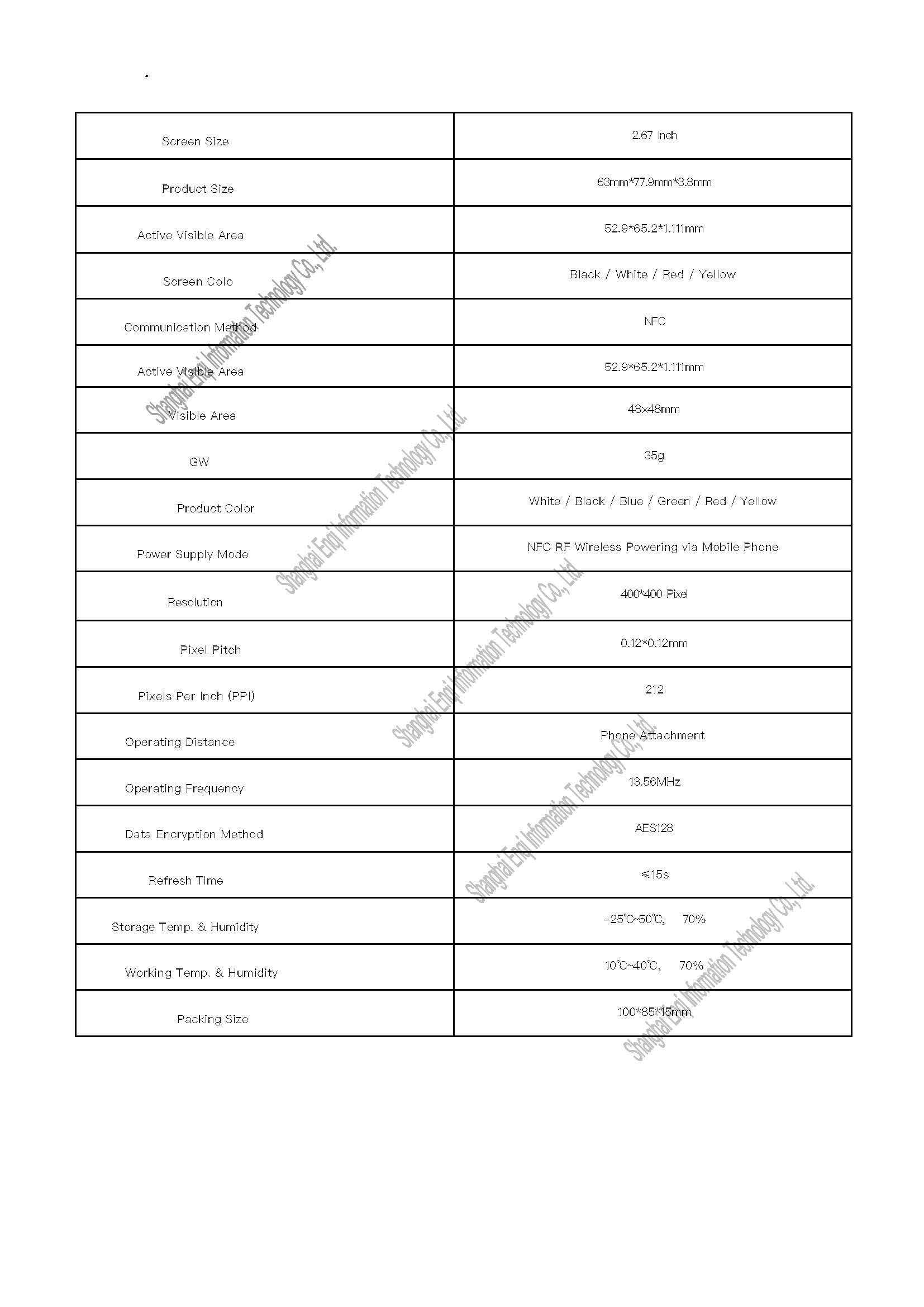
Yet its characteristics perfectly matched the needs of a fridge magnet: the image can persist, truly achieving zero-power display; the display effect is close to paper printing, warm and not glaring, fitting naturally in life-oriented scenes like kitchens and dining rooms; no charging needed, completely freeing from the constraint of plugging in; clearer display under sunlight.
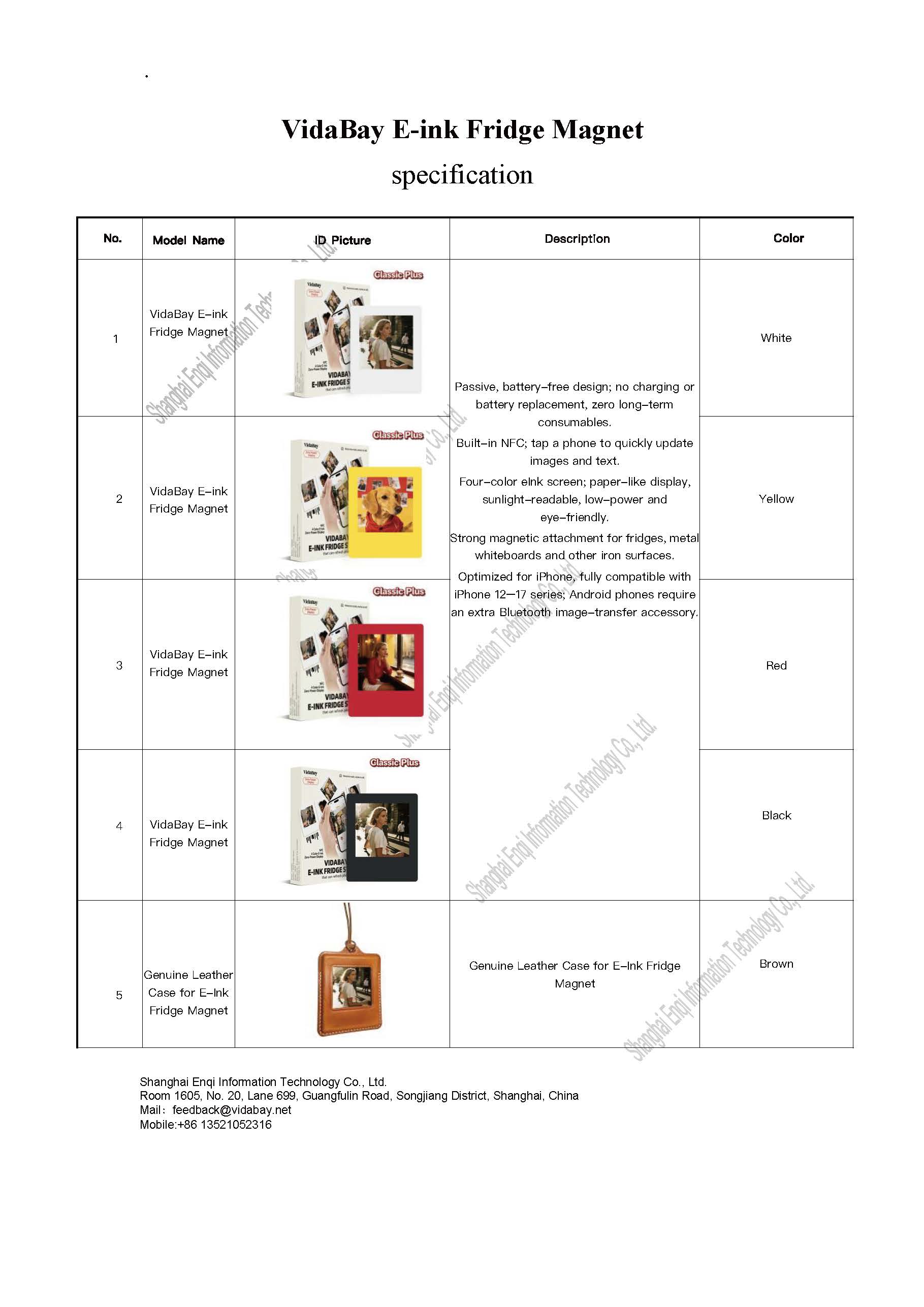
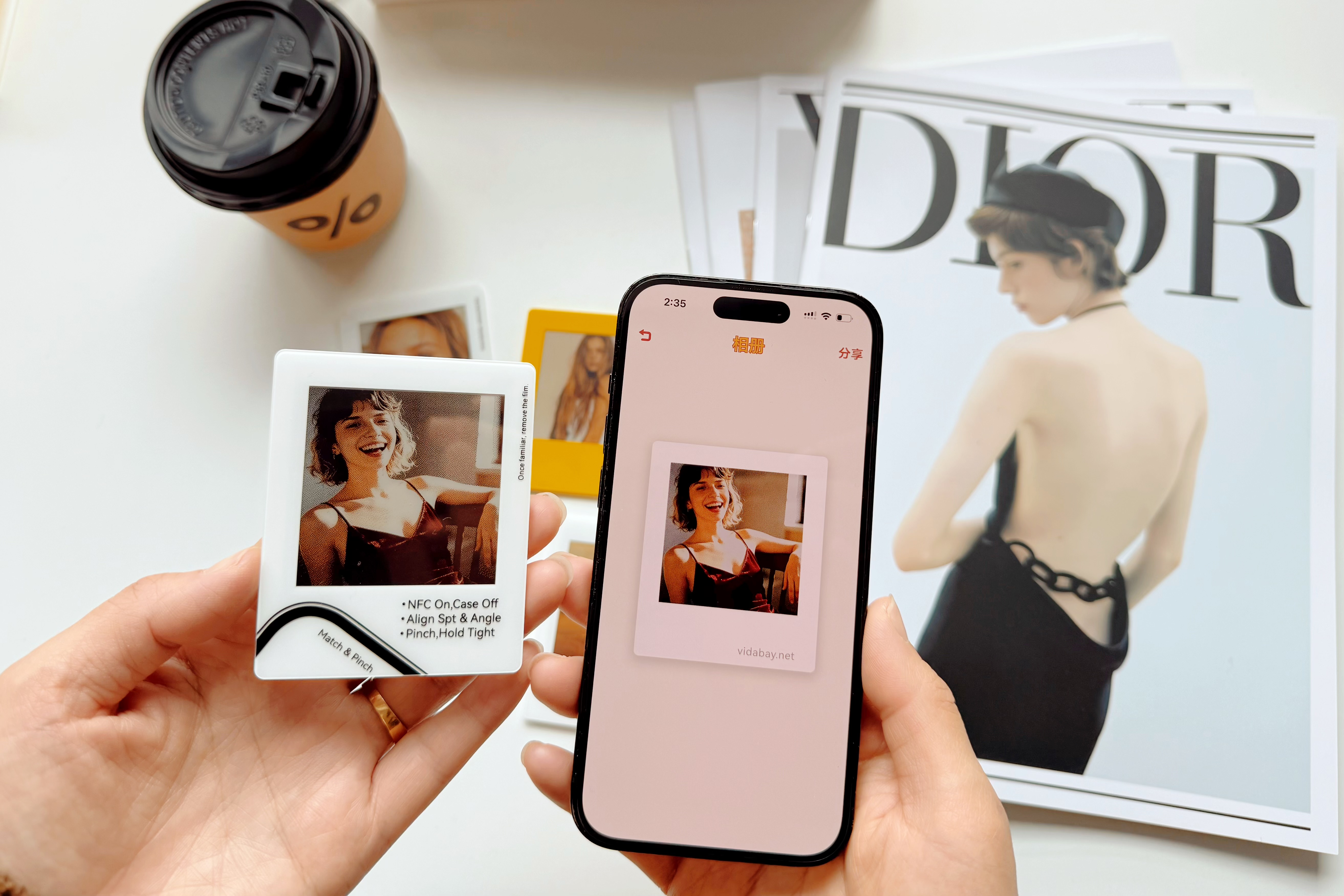
More importantly, the team made a key form factor decision: magnetic integrated design. This was the industry's first consumer product to deeply combine color ePaper with a magnetic fridge magnet form. No stand, no base, no redundant structure — the entire device is a slim magnetic block that works by simply sticking it on a refrigerator, whiteboard, or any iron surface. It can be taken off at will and takes up no space. Without the traditional smart device path of connecting via WiFi or Bluetooth to upload images, it understands the needs of overseas family users: simple, direct, zero threshold. Photos can be transmitted from a phone via NFC in about 30 seconds to sync to the screen, easily transmitting life photos. Children can upload their drawings to stick on the fridge, and even people unfamiliar with digital products can get started in a second.
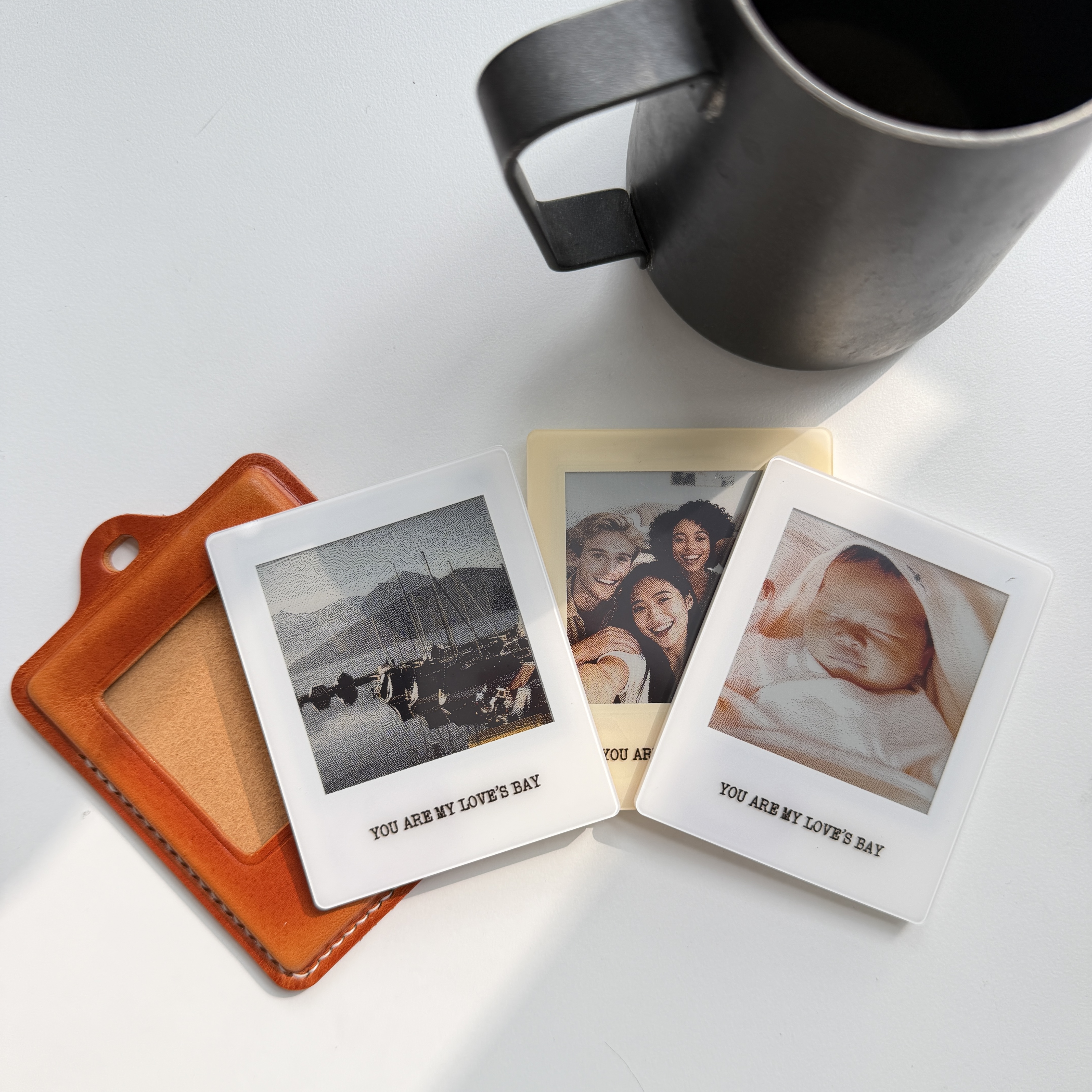
Beyond photo transfer, the team retained sufficient practical attributes: daily memos, to-do reminders, and message notes can all be updated at any time. It is no longer just a decorative item — exit reminders at the entryway, family message boards on the fridge, and it also comes with a genuine leather case that can be hung on a bag or car mount to always see your favorite photos.

Part Three: The Refinement — Obsessing Over Everyday Experience in Every Millimeter
From idea to mass production lies countless details requiring relentless effort.
First is thickness and weight. As a fridge magnet, being too thick would look clumsy and unaesthetic, with the risk of falling and screen breakage. The team repeatedly adjusted structural design and component selection, compressing the overall thickness to the extreme while maintaining screen pixel quality and aesthetic design, so that when stuck on the fridge, it looks like an exquisite, aesthetically pleasing magnetic decorative piece rather than an "electronic device."
The balance of magnetic force was also a focus of repeated tuning. Too weak, and it would slip when opening or closing the fridge door; too strong, and it would be inconvenient to remove and reposition. Engineers tested several magnetic solutions, ultimately selecting a balance that accommodates both stability and convenience — even with frequent fridge door opening and closing, it stays firmly attached.
Display quality tuning was another protracted battle. The color and contrast logic of ePaper is completely different from LCD screens. To present the most comfortable quality for portrait photos and landscape shots, the team imposed strict requirements on the screen supplier, ensuring all colors were consistent, and through continuous adjustment of waveform programs, ultimately achieved pure and unified colors.
What the product R&D team cared most about was also the real experience of "zero power consumption." Unlike the low-power claims of many products, the VidaBay fridge magnet requires no power when the image is static, displaying persistently.
In the team's view, good home tech products should be "invisible." They should not require users to learn how to use them, should not frequently remind users to charge, update, or maintain, but should quietly stay there, blending into daily life, ready to use exactly when needed.
Part Four: Going Global — From China Manufacturing to a Gentle Carrier for Global Families
After the product was finalized, Shanghai Enqi chose the path it knew best: entering overseas markets first.
Leveraging channel resources accumulated through years of cross-border trade, the VidaBay color ePaper fridge magnet quickly landed on mainstream cross-border e-commerce platforms in Europe and America, simultaneously entering overseas offline retail and gift wholesaler channels. The team had a clear rationale for choosing the European and American markets: overseas families have stronger demand for home decor, a more mature fridge culture, and a larger gift market, making this kind of small item combining creativity and practicality easier to break into the market.
Market feedback was more enthusiastic than expected.
Young overseas users use it as a DIY decoration tool, freely changing favorite illustrations and patterns to make the fridge a personalized corner of the home; family users use it to sync children's growing photos, with distant elders able to update photos with a tap, without needing to learn complex cloud albums; many use it as a kitchen assistant, posting recipes, writing shopping lists, and noting family dietary restrictions.
In many overseas buyers' reviews, the most frequently mentioned words are not "technology" or "smart," but "warm," "thoughtful," and "convenient." This precisely confirms the team's original idea: technology is never the end — making life a bit softer is.
For Shanghai Enqi, this small fridge magnet also has special significance. It represents the company's successful exploration from To B commercial display to To C consumer electronics; it is a landing of self-developed technology from serving government and enterprise clients to entering ordinary families worldwide. It proves that smart hardware does not have to be a grand narrative — thoroughly addressing and perfecting a tiny scenario can also create unique value.
Part Five: Epilogue — Letting Technology Move Into the Crevices of Life
Today, the VidaBay magnetic color ePaper fridge magnet has become a core growth pillar of Shanghai Enqi's overseas business, and the team's exploration continues.
From conference tablets to digital photo frames, to palm-sized fridge magnets, Shanghai Enqi has always been doing the same thing: finding the most suitable scenarios for display technology. If large screens are for improving efficiency and collaboration, then this small E Ink screen is for filling those trivial, warm, overlooked moments in life.
In the VidaBay brand name, "Vida" comes from the Spanish word for "life," and "Bay" means harbor. This small fridge magnet, just like its name, has no showy specs, no complex features — it just quietly sticks on the fridge door, using a photo that can be updated anytime, a warm message, or a clear list to become a small happiness in daily life.
True innovation is not always a world-disrupting breakthrough. Sometimes, putting an old technology into a new scenario, doing a small thing to the extreme, and letting technology truly blend into everyday life — that is the most vital innovation.