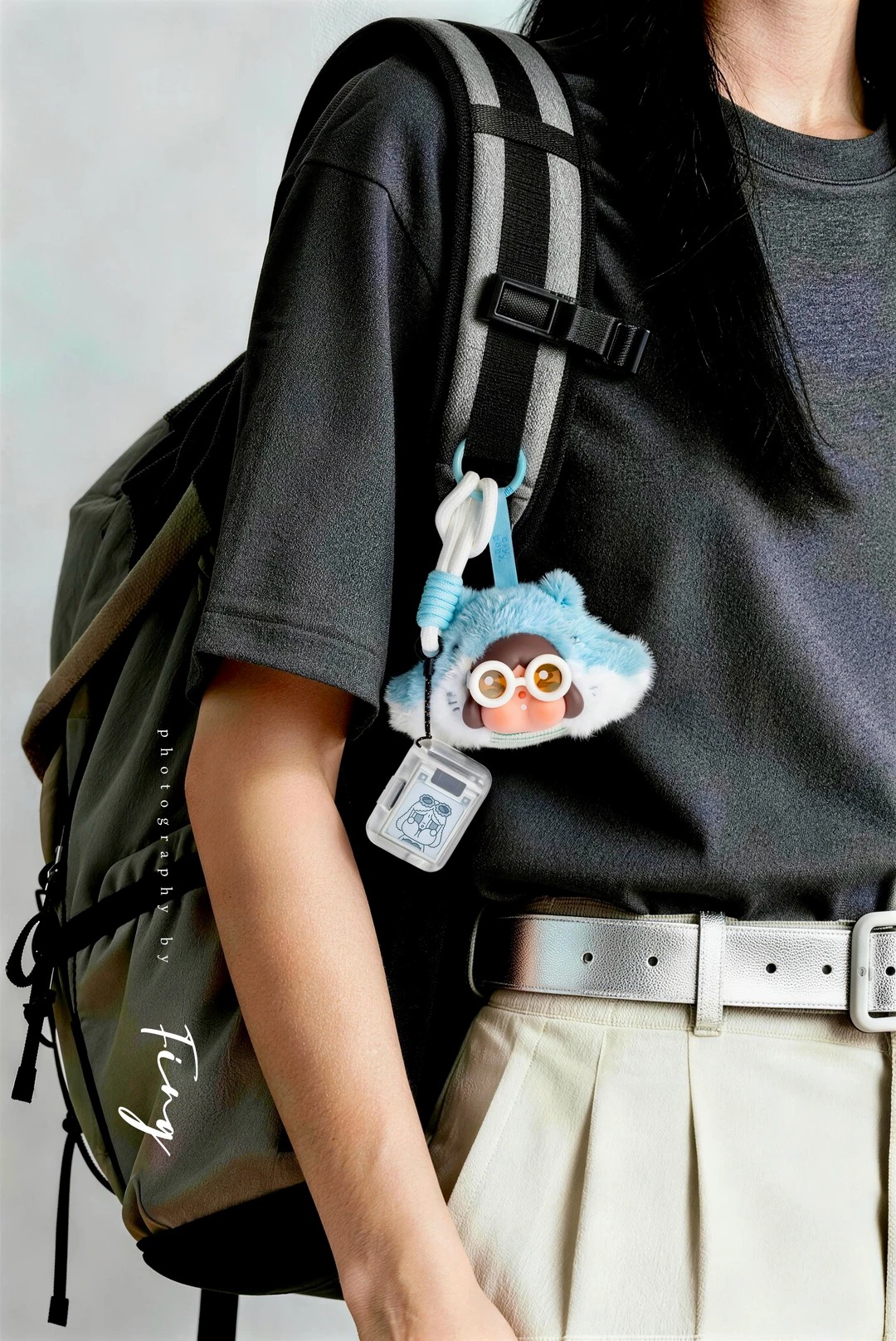
When answers are easier to come by than ever, why do we want to create an "ePaper Pocket Oracle"?
Truth be told, we have probably never had such easy access to answers as we do today.
Almost any question can be quickly searched, compared, and categorized: what to eat, which one to buy, whether to go or stay, whether to start now or wait a while. Open your phone, type in a few keywords, or ask an AI, and a string of seemingly reasonable suggestions will appear on your screen in moments. We are never short on information or methods, and even our emotions come with ready-made scripts and solutions.
The strange thing is that while answers have become easier to obtain, the act of making a decision hasn't necessarily become any easier.
Often, what exhausts us isn't the monumental choices that alter the course of our lives, but those tiny, frequent, and recurring questions in our daily routine. They aren't worth serious analysis, yet they pop up throughout the day, like faint noise, continuously draining our attention and willpower. What should I have for lunch? Should I keep this appointment? Should I place this order? Should I reply to this message now or later? Individually, these questions are trivial, but the repeated hesitation causes them to accumulate into a persistent form of mental friction.
More subtly, we seem to have grown accustomed to waiting for an external validation before taking action.
Search engines, recommendations, rankings, reviews, social media, and algorithmic feeds—almost every system is designed to help us find a "seemingly correct" direction faster. Yet precisely because of this, many people find it increasingly difficult to make a choice of their own without references, endorsements, or standard answers.
It is precisely in this state that we began to think: what people really lack today might not be more answers, but a lighter response. Not more complex analysis, and not another portal that drags you back into the endless information stream. Instead, we need something that provides a sufficiently direct, light, and burden-free feedback in those small but real moments, allowing those minor, stalling problems to finally move forward.

The Significance of Being Carried
Later, our team members realized that the value of things we carry with us long-term often lies beyond their mere functions.
When discussing "what kind of objects do people keep with them," someone recalled a quote from a fashion marketing mentor during their student days: Perfume is important not just because it smells good, but because it integrates into one's life rhythm. A spritz before leaving the house signals the start of the day; the familiar scent on your wrists and collar slowly transforms into a state of mind, a memory, or even a part of one's self-identity.
This led us to re-evaluate those small items that people naturally keep by their side.
It might be a headphone case, a keychain, a bag charm, a perfume, a small ornament, or even just something they habitually hold in their hands. They are not necessarily powerful, high-frequency, or even strictly "necessary," but they slowly participate in a person's emotions and rhythm through daily repetition. Often, we carry them not because they solve major problems, but because, in specific moments, they offer companionship, a reminder, or a very subtle yet real psychological hint.
The Pocket Oracle is closer to this kind of existence.
It is not just a gadget packed with a few features, nor is it an electronic item manufactured just for "fun." More accurately, it is a "light-response device" that you carry with you: you don't need to use it all the time, and it won't proactively disturb you. But in certain moments—like when you are hesitant, bored, restless, or just want to add a little something different to your day—you will think of it, pick it up, press it, and receive a response.
It is precisely for this reason that we stopped viewing it merely as a hardware product.
It should be light enough to naturally enter your daily life; small enough to slip into a pocket or hang on a bag; and restrained enough that it doesn't need to prove itself through complex functions, but rather, on a scale closer to life, slowly becomes something that people remember and take with them.
"The me of today is a little different from the me of yesterday."