
Innovation: PaperColor adopts a finished, ready-to-use form factor, integrating full-color ePaper display, wireless connectivity, voice interaction, environmental sensing, and low-power power management into a single development platform. This empowers enterprises and developers to rapidly develop product-grade ePaper innovations and creative applications.
Product Overview
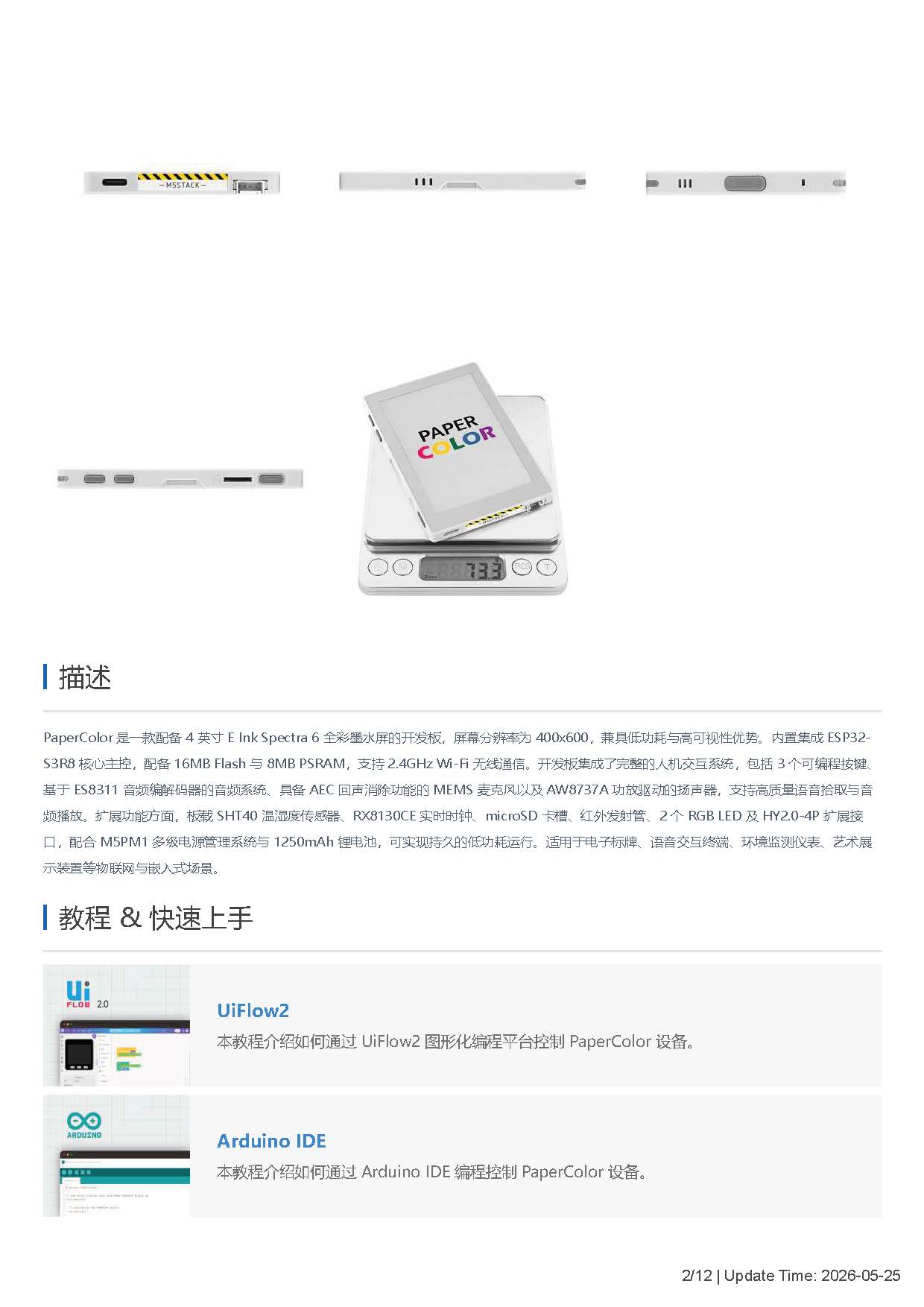
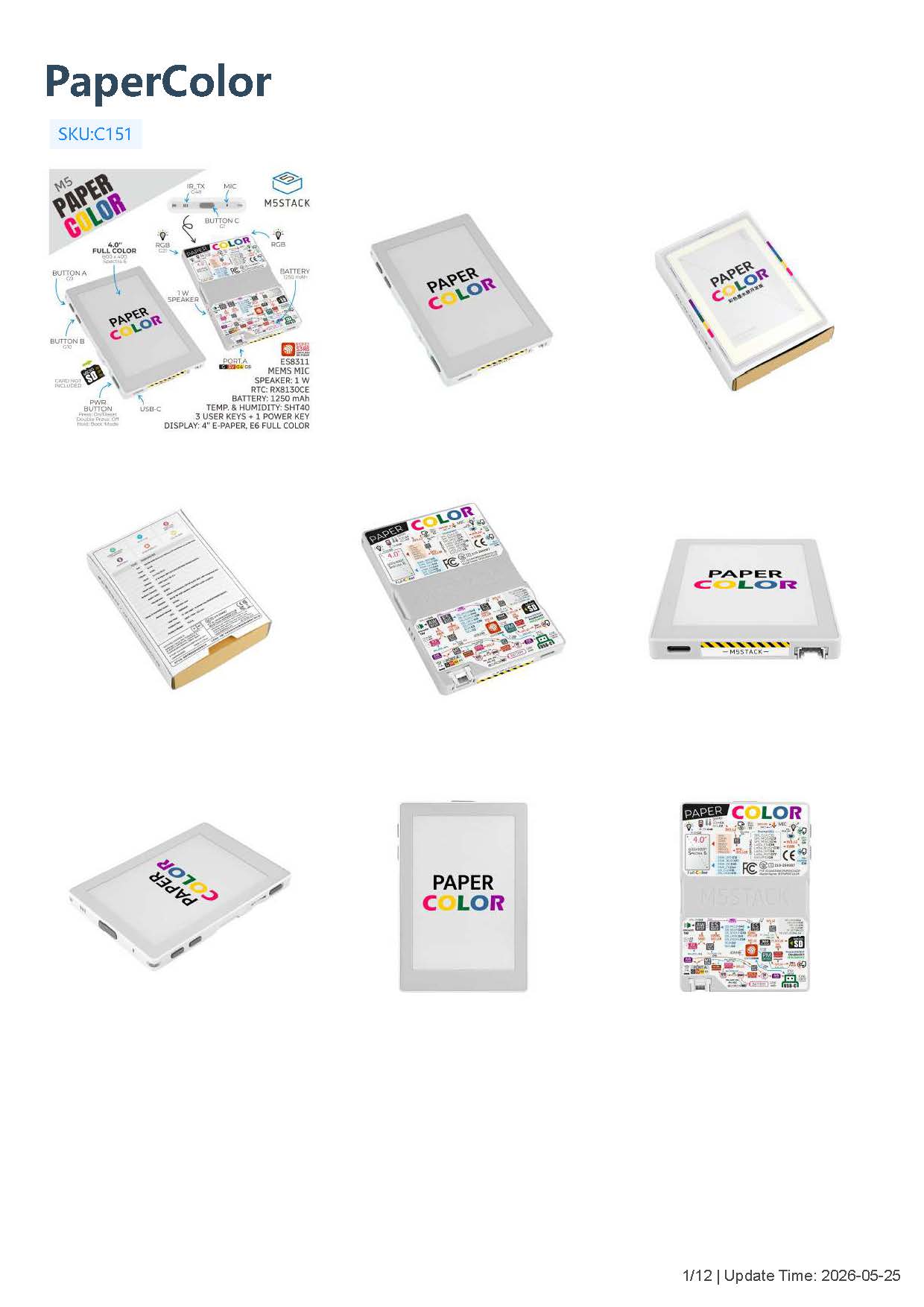
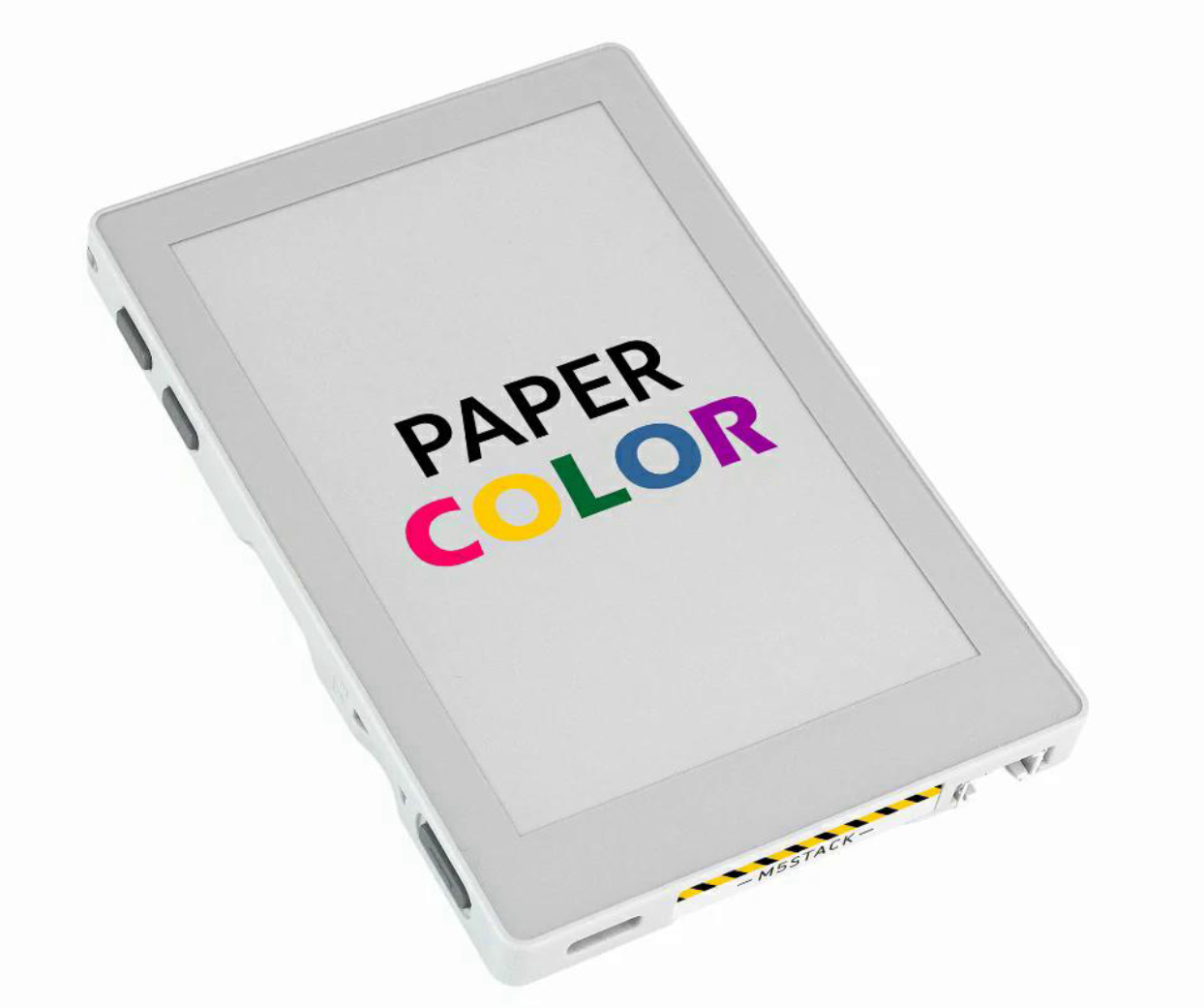
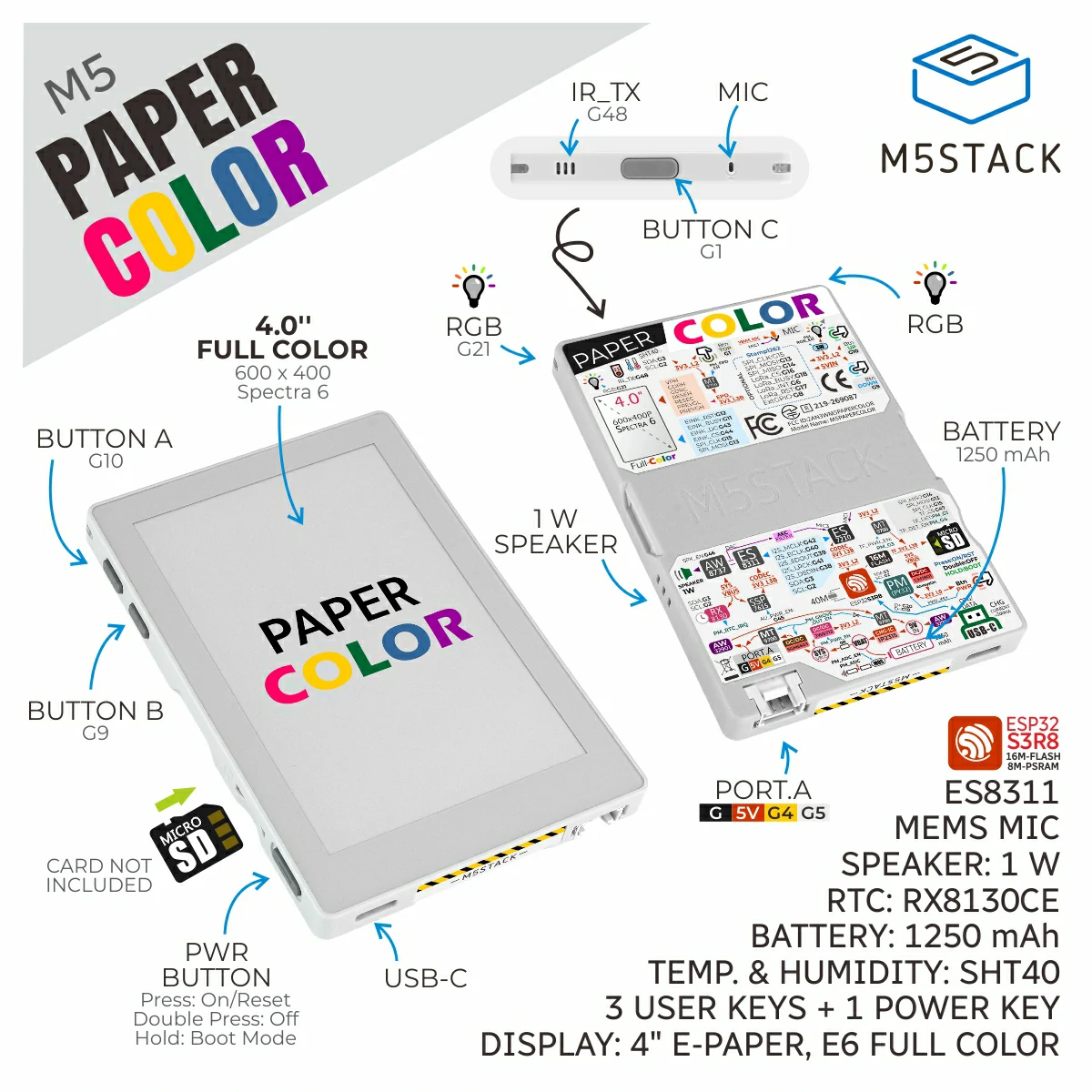
PaperColor is a development board designed for full-color ePaper IoT innovation. It features a 4-inch E Ink Spectra 6 full-color ePaper display (400x600 resolution) as its core. The platform is powered by the ESP32-S3R8 dual-core MCU, equipped with 16MB Flash, 8MB PSRAM, and 2.4GHz Wi-Fi capabilities. Unlike traditional ePaper modules, which are primarily for screen driving, PaperColor integrates display, networking, voice, sensing, storage, power management, and human-machine interaction (HMI) into a thin, compact device, allowing developers to bridge the gap from concept validation to product-ready prototypes faster.
Full-color ePaper has long been recognized as a vital medium for bridging digital content and low-power physical environments. It offers a reflective display effect similar to paper, remaining clear even in bright sunlight, and requires almost no power for static images, making it ideal for applications that require long-term information display without frequent recharging. PaperColor utilizes the Spectra 6 full-color ink display because it can render not only text and icons but also color gradients, brand identity, artistic visuals, and more expressive information interfaces, shifting ePaper from "low-power monochrome labels" to "intelligent color terminals."
Innovation Context
In the ePaper industry, many innovative applications remain at the concept stage—not for a lack of imagination, but because of the high barriers to prototyping. Developers previously had to handle screen driving, MCU selection, wireless communication, battery management, sensor integration, audio acquisition, peripheral expansion, and firmware adaptation separately. Each step is time-consuming, hindering the rapid implementation of simple ideas. In the full-color ePaper field, balancing screen refresh, power consumption, color rendering, and interaction is particularly complex, placing higher demands on hardware integration.
PaperColor addresses this pain point by pre-integrating the most common, critical, and highly coupled capabilities required for ePaper development, allowing developers to bypass building base hardware from scratch. Whether creating smart photo frames, low-power environmental meters, desktop information signs, or exploring voice-interactive ePaper terminals, users can conduct rapid experiments on a single board. This lowers the entry barrier and allows more cross-disciplinary creators to contribute to the ePaper ecosystem.
Core Technical Solution
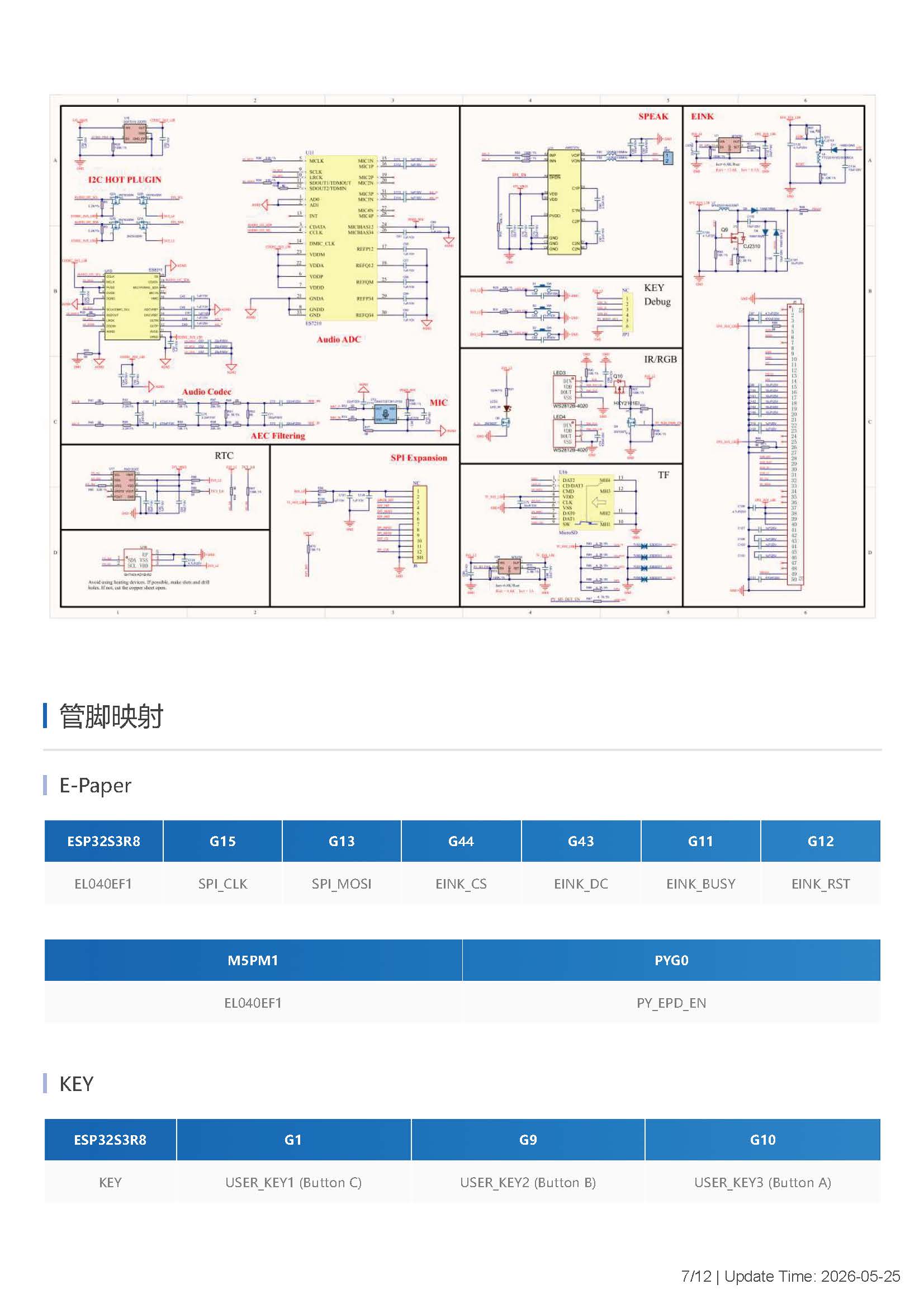
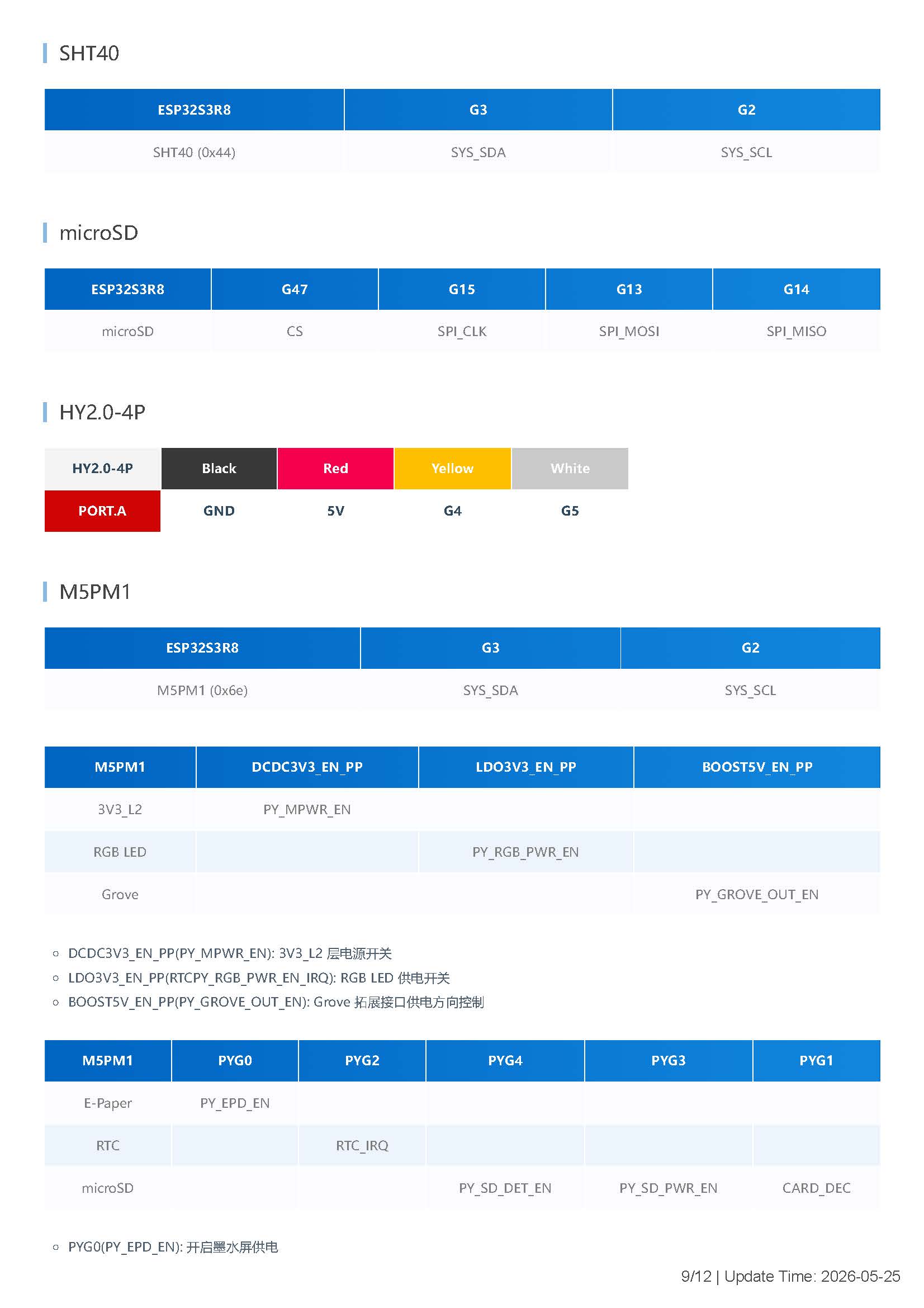
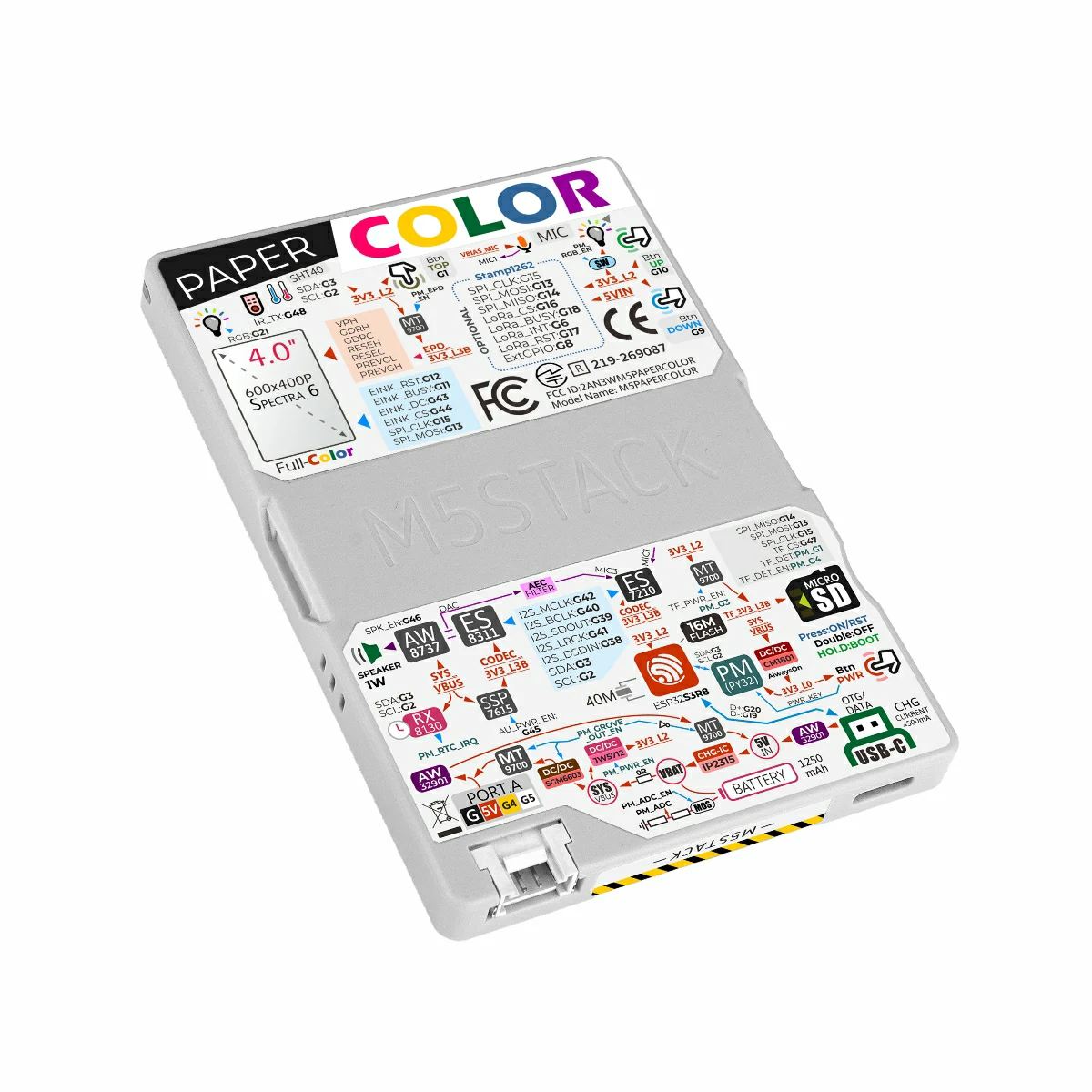
The core control unit of PaperColor is the ESP32-S3R8, featuring a dual-core Xtensa LX7 processor clocked up to 240MHz. With 16MB Flash and 8MB PSRAM, it provides the computational foundation for graphical user interfaces (GUI), network communication, local data caching, and multi-tasking. Wi-Fi capability enables connection to cloud content, LAN services, or data platforms. Combined with a microSD card slot, it allows for both online data retrieval and offline storage of images, configuration files, and logs.
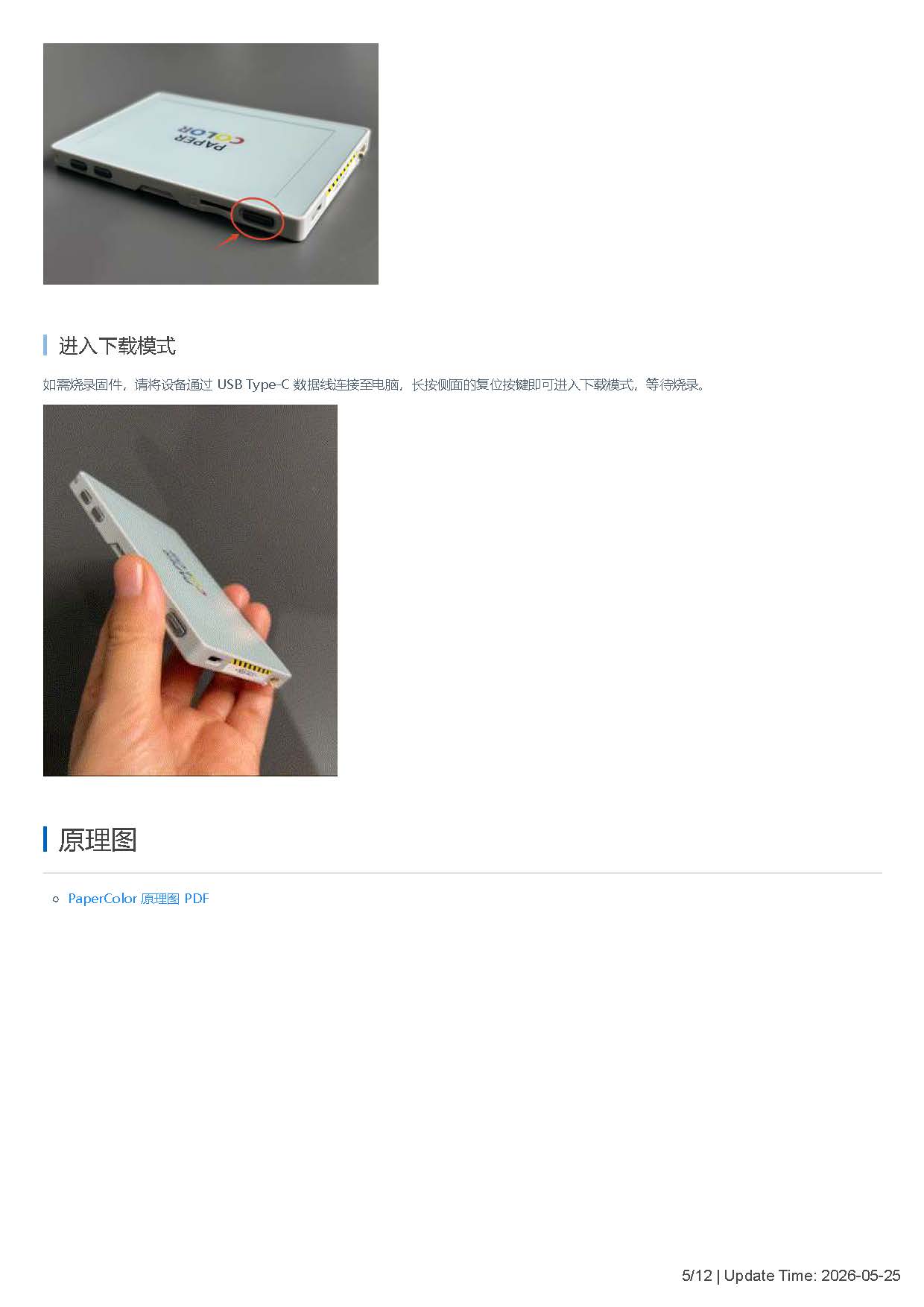
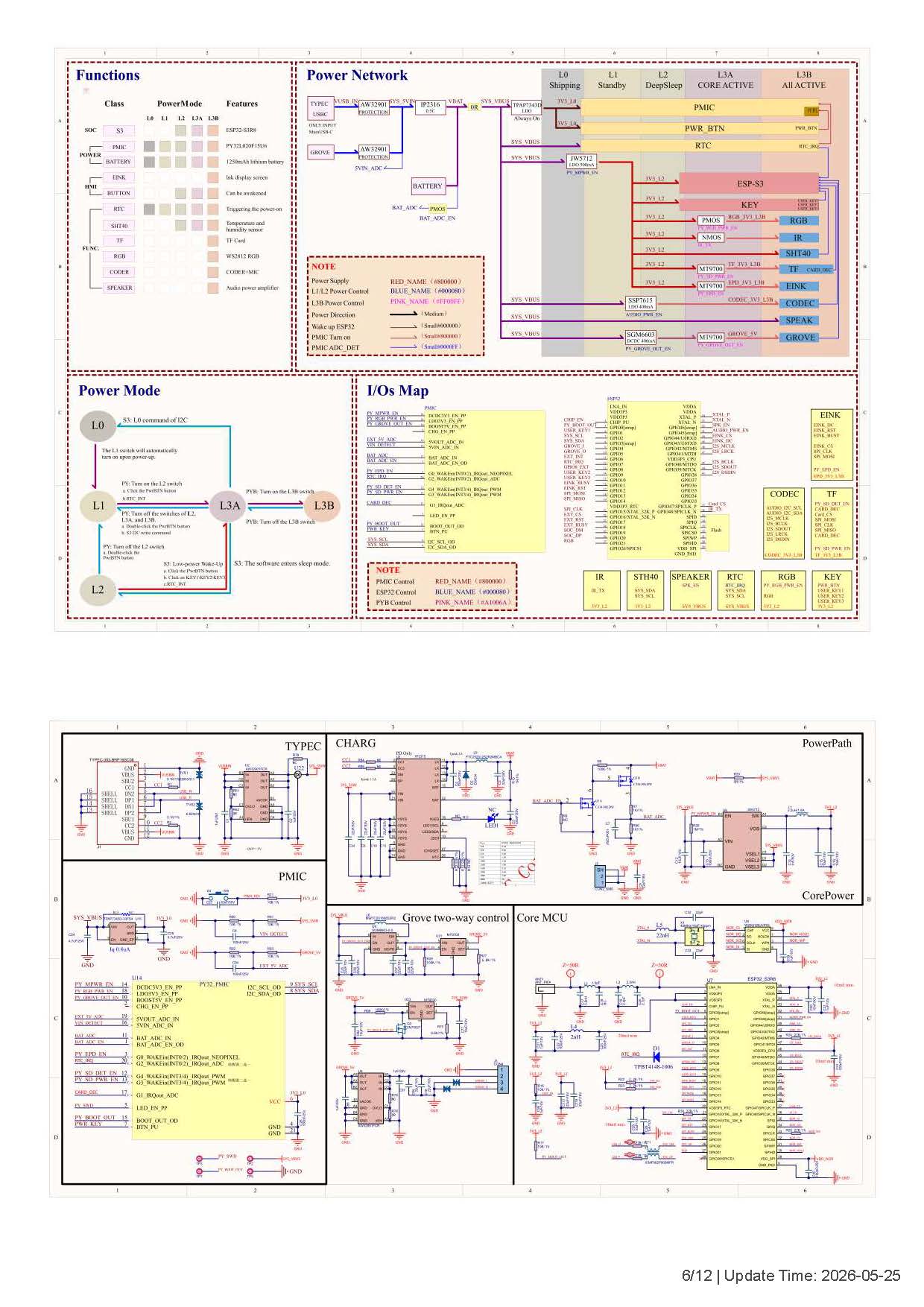
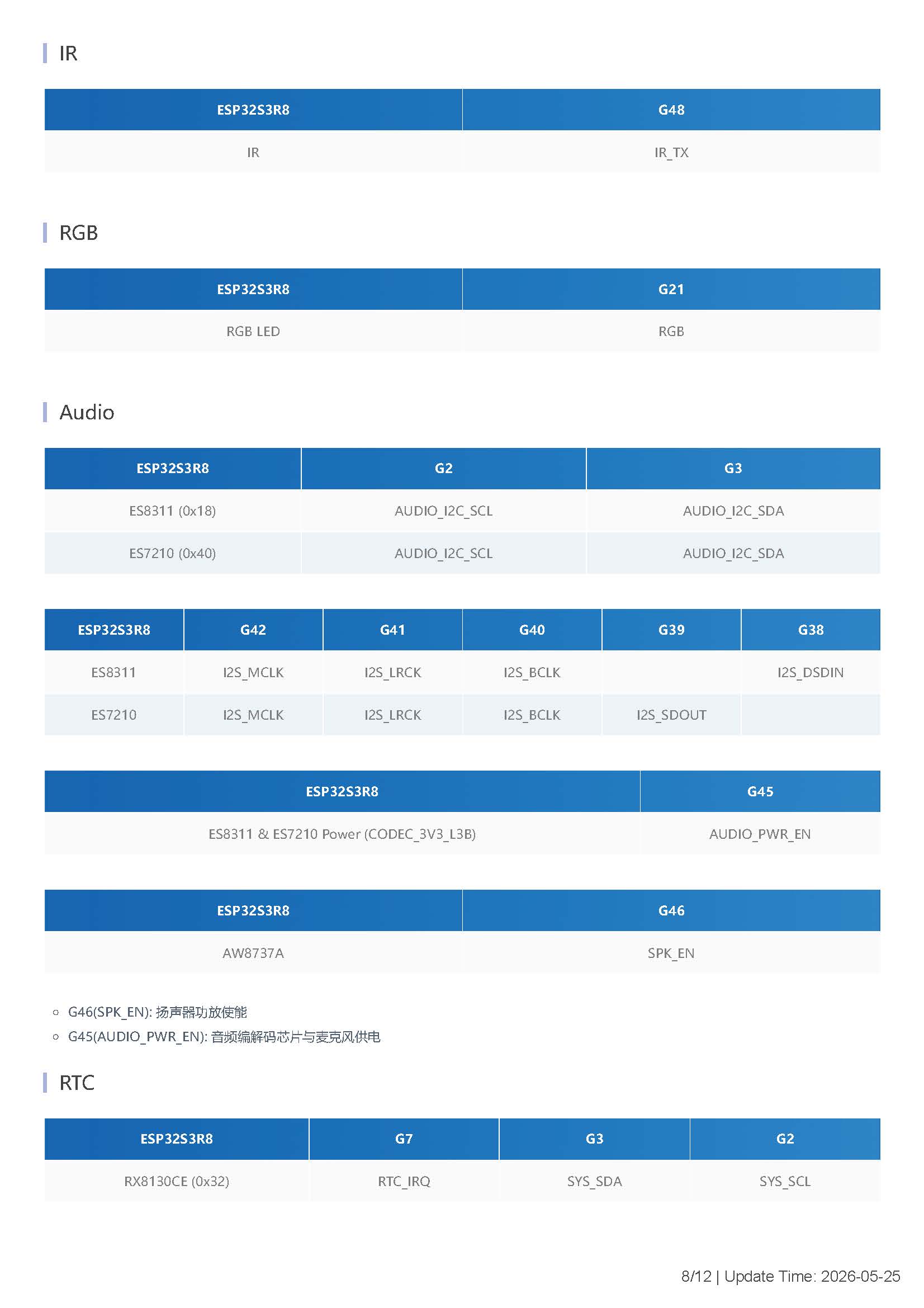
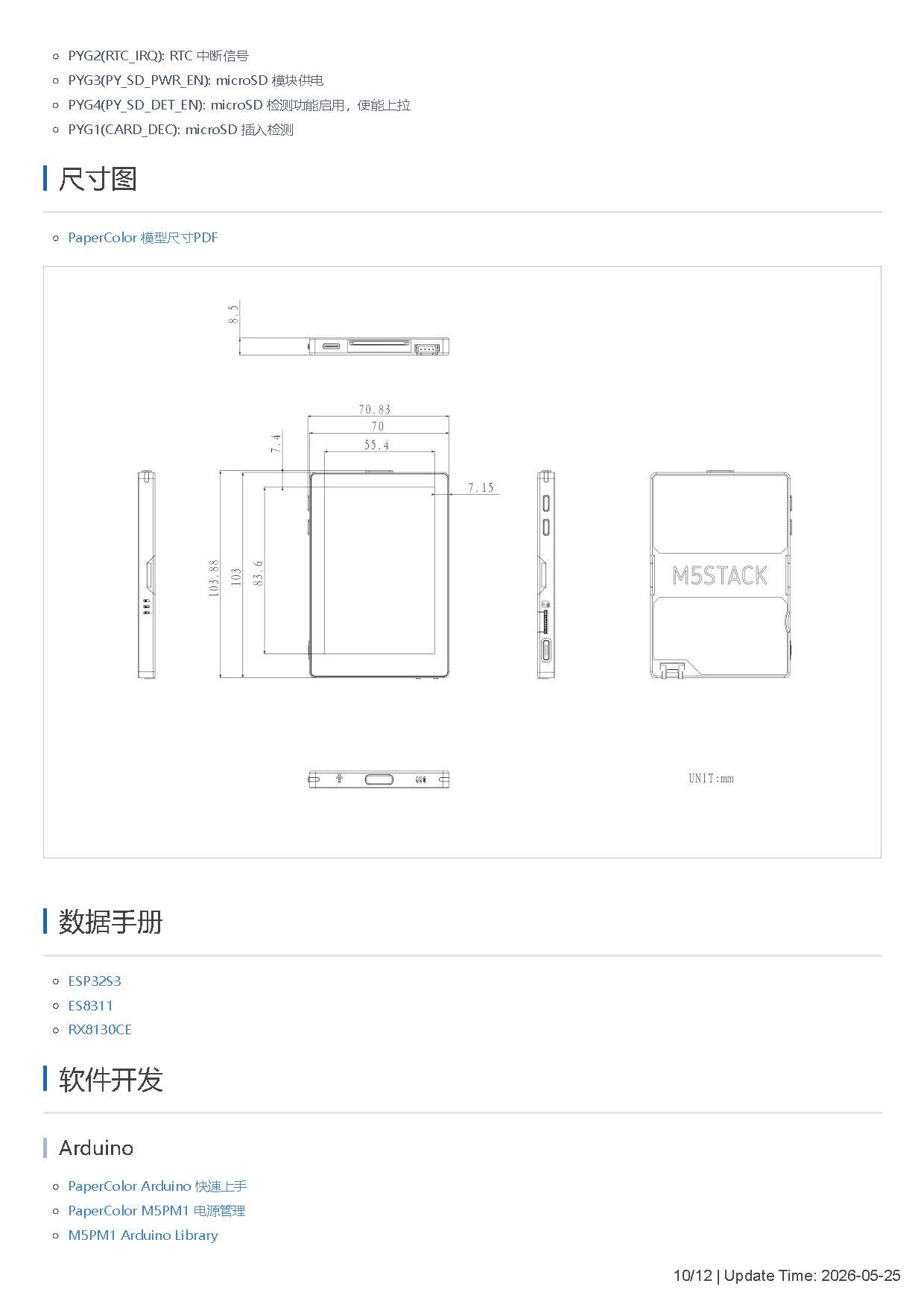
For HMI, PaperColor integrates three programmable user buttons and one power button, complemented by two RGB LEDs and an IR transmitter for status indicators, remote control expansion, or scene linkage. Crucially, it features an integrated audio system based on the ES8311 audio codec, paired with an ES7210 audio ADC, a MEMS microphone with AEC (Acoustic Echo Cancellation), and a 1W speaker driven by an AW8737A amplifier. This configuration allows ePaper devices to move beyond buttons and screens, enabling voice pick-up, voice prompts, audio playback, and more natural human-machine feedback.
Regarding environmental sensing and reliability, the board carries an SHT40 temperature and humidity sensor and an RX8130CE Real-Time Clock (RTC), supporting environmental monitoring, scheduling, timed refreshes, and offline operation. Coupled with the M5PM1 multi-stage power management system, the device manages power for the screen, storage, expansion interfaces, and peripherals, ensuring stable operation in desktop, wall-mounted, shelf, and display scenarios.
Product Experience and Application Value
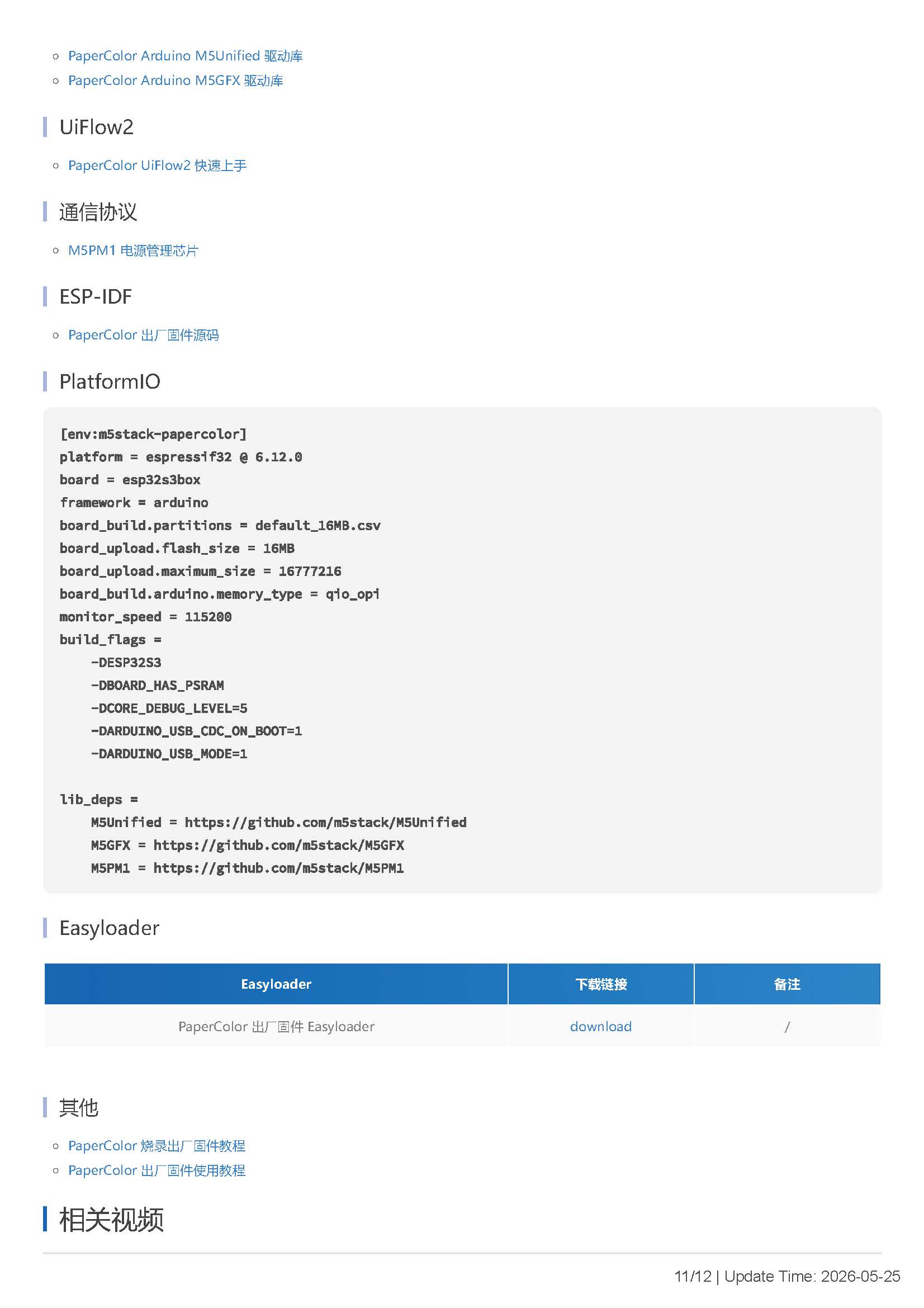
PaperColor’s value lies not just in its hardware specs, but in its ability to provide a complete "first prototype." Developers can quickly achieve basic interaction using the UiFlow2 graphical programming platform or delve deeper using the Arduino IDE, ESP-IDF, or PlatformIO. For educators, makers, industrial design teams, IoT solution providers, and ePaper enterprises, this multi-layered software access balances rapid onboarding with professional scalability.
In practical use, PaperColor has already enabled diverse creative applications. Some have configured it as a Home Assistant dashboard to display home environmental data, device status, schedules, and automation info; others use it as a desktop personal information panel to display low-frequency but important content. Full-color capability makes it easier to distinguish between different information levels while maintaining a paper-like visual experience.
In smart interaction, users are experimenting with connecting PaperColor to intelligent agents or LLM services (e.g., Hermes Agent, Claude), allowing the ePaper terminal to not only display information but also handle Q&A, summaries, reminders, and voice feedback. With its microphone, speaker, buttons, and Wi-Fi, PaperColor can serve as a low-power, non-intrusive smart desktop entry point, rather than a traditional high-brightness screen terminal.
In content consumption and creative scenarios, some users utilize PaperColor to read manga, display illustrations, or build desktop art installations. The soft imagery of the Spectra 6 full-color ePaper allows color content to exist in living spaces in a quieter, more paper-like way, without relying on high-brightness backlights. These DIY use cases demonstrate that PaperColor is not just for engineering validation, but also has the potential to inspire personal creation and lifestyle applications.
Significance of Innovation
PaperColor’s innovation lies in its systemic integration of capabilities—E Ink Spectra 6, ESP32-S3, Wi-Fi, voice interaction, sensing, local storage, IR expansion, RGB feedback, and multi-stage power management—into a single, compact development board. It is not a simple combination of modules, but a systematic integration of the capabilities required for full-color ePaper application validation.
Traditional development often requires developers to connect screens, MCUs, power, sensors, and audio modules manually, while handling software/hardware adaptation. PaperColor standardizes these capabilities, significantly shortening the prototyping cycle. Developers can focus on application scenarios, content design, interaction, and business models rather than hardware assembly and debugging.
The significance of this is clear: it provides a relatively open, user-friendly, and reproducible entry point for full-color ePaper applications. The ePaper industry’s growth relies not only on screen performance but also on tools that support application validation and ecosystem expansion. By transforming upstream display technology into a tangible, programmable, and demonstrable product base, PaperColor helps evolve ePaper from a single display component into a complete, intelligent terminal solution.
Future Outlook
As the boundaries of ePaper applications expand, future terminals will do more than just "display content"—they will take on more tasks related to sensing, connectivity, feedback, and interaction. PaperColor represents a shift toward giving full-color ePaper more "terminal-like" capabilities. It can serve as a rapid tool for solution providers to validate industry needs, an introductory platform for education and makers, and a sandbox for enterprises to incubate new products, services, and scenarios.
At the industry level, PaperColor acts as a bridge between upstream screen innovation, midstream module/system integration, and downstream application/content services, creating a more efficient innovation chain. The prototypes built on PaperColor may become the starting point for ePaper’s entry into new scenarios, making full-color ePaper easier for developers to utilize and test, and allowing more innovative applications to be verified in real-world environments.
Ultimately, PaperColor’s story is not just about a development board, but a reflection of the trend toward full-color, intelligent, and low-power interactive ePaper applications. Through its miniaturized, open, and integrated approach, it provides a practical prototyping foundation for enterprises and developers to explore the next generation of ePaper terminals.
Key Specifications Summary
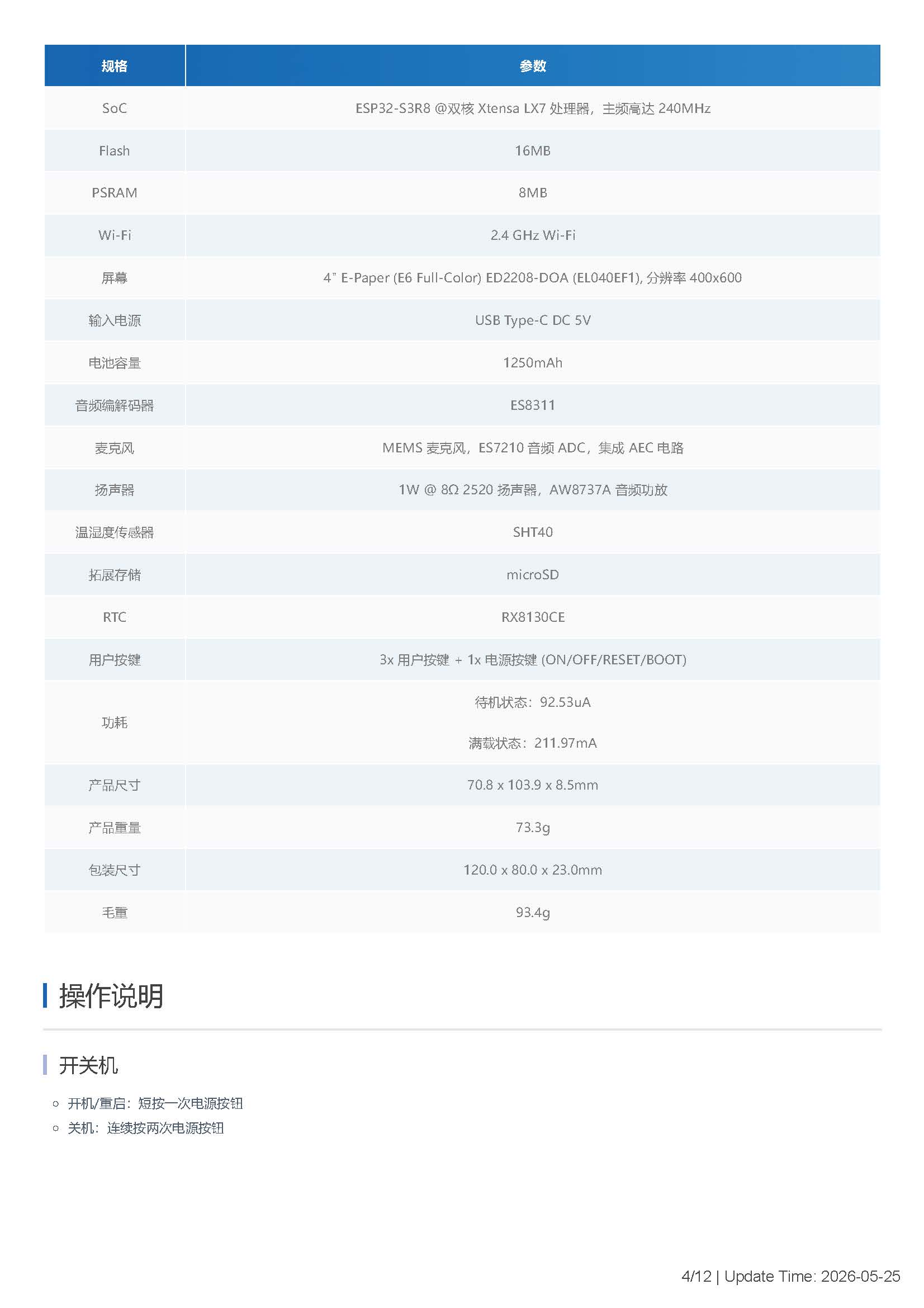
| Item | Configuration & Value |
| Display | 4-inch E Ink Spectra 6 full-color ePaper, 400x600 resolution; ideal for low-power color information display. |
| MCU & Connectivity | ESP32-S3R8, 16MB Flash, 8MB PSRAM; supports 2.4GHz Wi-Fi. |
| Interaction | 3 user buttons, RGB LEDs, IR transmitter, speaker & MEMS microphone; supports voice and multimodal feedback. |
| Sensing & Battery | SHT40 temp/humidity sensor, RX8130CE RTC, M5PM1 power management, 1250mAh Li-ion battery. |