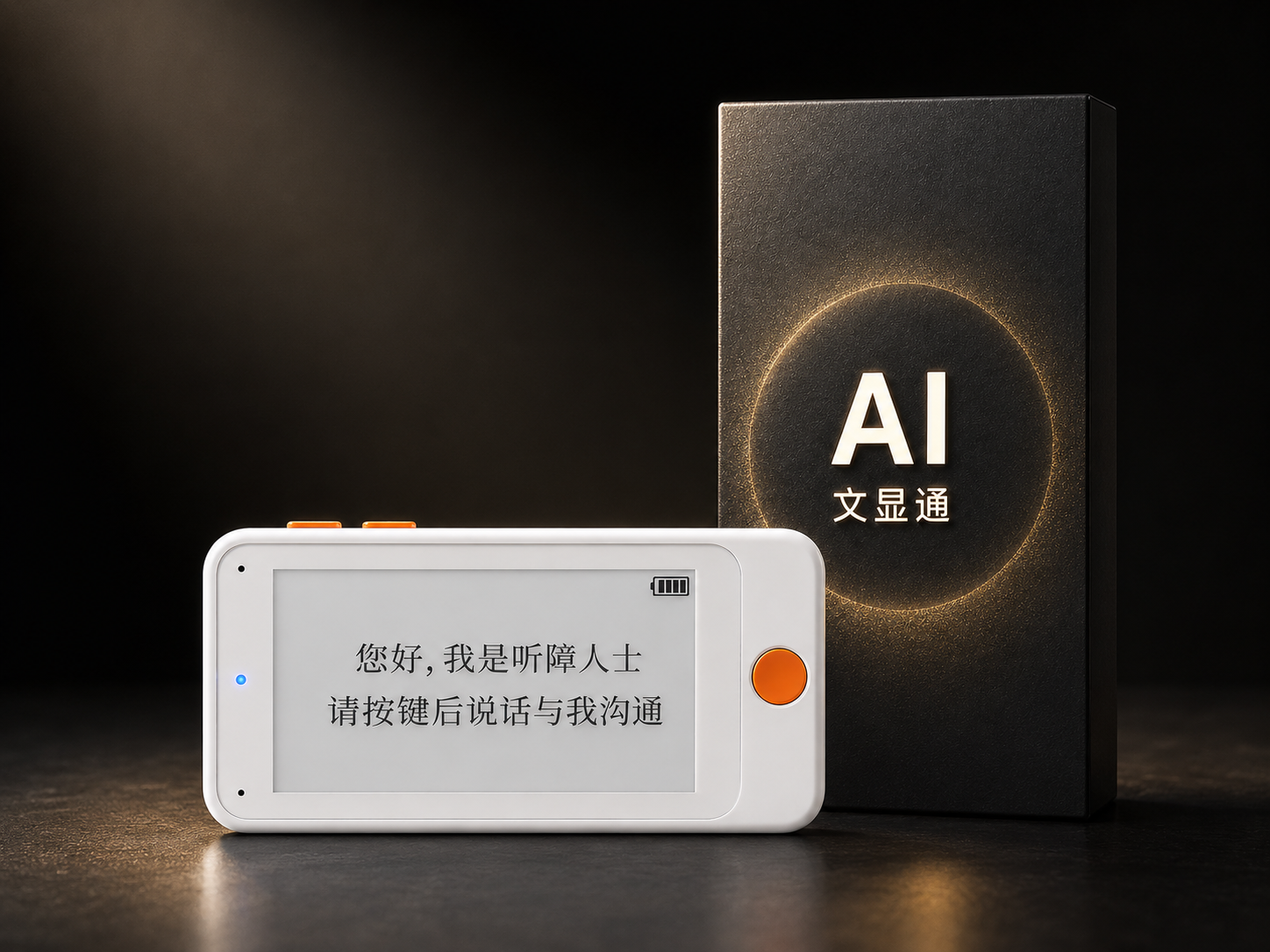
In China, there are over 27.8 million people with hearing impairments. They appear to blend into everyday life, yet remain trapped in a silent corner, enduring communication struggles that most people cannot imagine. At the hospital, they miss the doctor's instructions; in workplace meetings, they cannot keep up with team discussions; while shopping, they often miss what the shop assistant says; during family chats, they miss those gentle, everyday exchanges. Hearing loss is an invisible wall — it does not affect one's appearance, but it isolates them from the warmth of human connection. Many hearing-impaired individuals are often misjudged as indifferent or slow because they cannot hear clearly or respond promptly. Over time, they gradually withdraw from social interactions and close themselves off. For years, traditional hearing aids and generic speech-to-text tools have failed to address the real-world pain points: severe latency, inability to recognize dialects, unusable in noisy environments, privacy risks, and insufficient battery life for daily use. It is precisely these long-unfilled needs that gave rise to WenXianTong. Powered by a deep integration of self-developed chips and AI technology, it achieves breakthroughs across both hardware and software, building a reliable, secure, and user-friendly barrier-free communication bridge for the hearing-impaired community.
The birth of this product was never about piling up technology for its own sake. It stems from the R&D team's deep empathy for and field research into the real lives of the hearing-impaired. The team discovered that most assistive tools on the market can only handle basic Mandarin transcription and simply cannot adapt to real-life, diversified scenarios. Many cloud-based transcription apps not only suffer from lag, severely disrupting conversational flow and affecting normal communication, but also pose privacy risks through potential leaks of conversation records. More critically, the majority of grassroots hearing-impaired users communicate primarily in local dialects, yet most devices are virtually useless for dialect recognition — rendering them practically unusable. Beyond that, traditional device screens are harsh on the eyes, causing fatigue during prolonged use; the devices are bulky and inconvenient to carry; and power consumption is high with short battery life. One by one, these real-world frustrations strengthened the R&D team's resolve: to build a dedicated communication aid truly suited to the daily, safe, durable, and all-scenario needs of the hearing-impaired.
To fundamentally overcome the industry's long-standing issues of high latency, weak computing power, and cloud dependency, the R&D team spent years developing a proprietary inference chip — WenXianTong's core technological moat. Unlike general-purpose chips designed for broad applications, this self-developed chip is purpose-built with an architecture optimized for real-time speech transcription, delivering more precise computing resource allocation and higher operational efficiency. It enables the device to perform high-intensity AI computations locally, completely eliminating reliance on cloud data. Leveraging this self-developed computing power, the device features a newly iterated AI speech recognition model achieving up to 97% Mandarin accuracy, capable of accurately capturing soft tones, short sentences, and natural speech patterns in everyday conversation, maximally restoring authentic dialogue and eliminating fuzzy, erroneous, or distorted transcriptions.

Recognizing China's diverse linguistic environment, the team specifically tackled the challenge of dialect recognition, breaking through technical bottlenecks such as mixed accents and non-standard pronunciation to support real-time transcription of multiple regional dialects. Whether at a township hospital visit, a market shopping trip, or casual dialect conversation among family and friends, WenXianTong delivers fast and accurate transcription, effectively bridging regional language barriers. Through deep co-optimization of chip and algorithm, the device significantly reduces display latency, thoroughly solving the classic problem of "the person has finished speaking but the text only appears afterward" that plagues traditional devices, achieving synchronous voice-to-text presentation so hearing-impaired users can smoothly keep pace with conversations and enjoy a natural, equal two-way communication experience.
In hardware design, WenXianTong consistently puts people first, refining every detail based on real user scenarios. In daily life, the vast majority of communication takes place amid noise — the clamor of streets, shopping malls, hospitals, and offices has always been the biggest obstacle to hearing-impaired communication. To address this pain point, WenXianTong is equipped with dual-microphone noise reduction and directional pickup technology. Through the coordinated work of two microphones, it precisely locks onto the speaker's voice directly ahead while intelligently filtering out wind noise, ambient clutter, and background noise, focusing on the effective sound signal. Even in crowded, acoustically complex public settings, it stably captures voices and delivers clear transcription, truly enabling barrier-free communication across all scenarios.
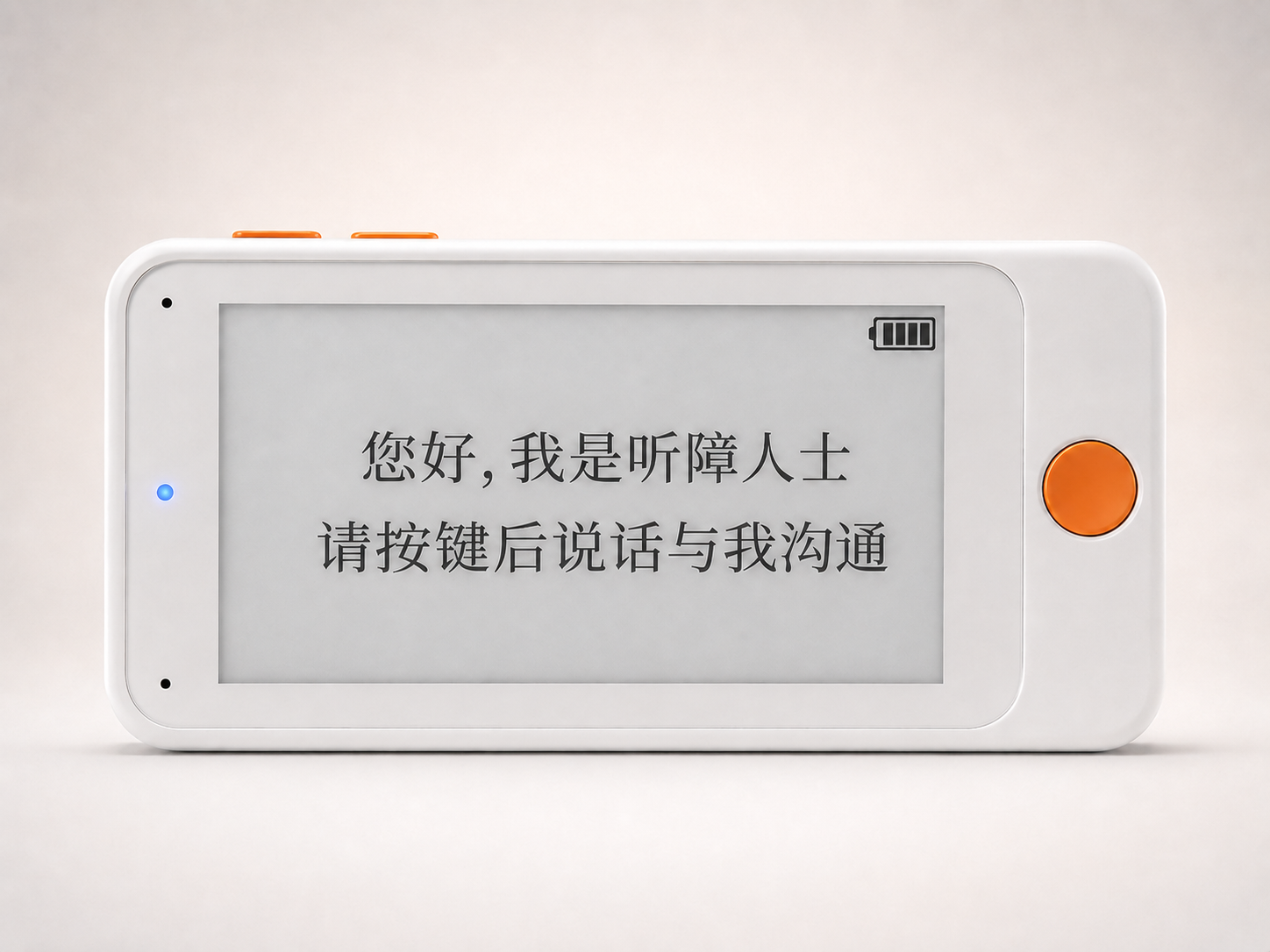
The screen is the core medium through which hearing-impaired users receive conversation information. To accommodate extended reading needs, WenXianTong abandons harsh conventional electronic screens in favor of an eye-protecting E Ink display. With its paper-like viewing experience free of blue light and flicker, prolonged viewing causes minimal visual fatigue, fully safeguarding users' eye health. At the same time, the team deeply optimized the display algorithm, and combined with the self-developed chip's extreme processing speed, compresses the entire transcription-rendering-display pipeline, achieving seamless voice-to-text synchronization with a smooth and natural viewing experience. The device body is also designed for both portability and practicality — compact, lightweight, and easy to stow, it fits effortlessly into a backpack or pocket, ready to be taken out for commutes, work, medical visits, or gatherings, enabling barrier-free communication anytime, anywhere.
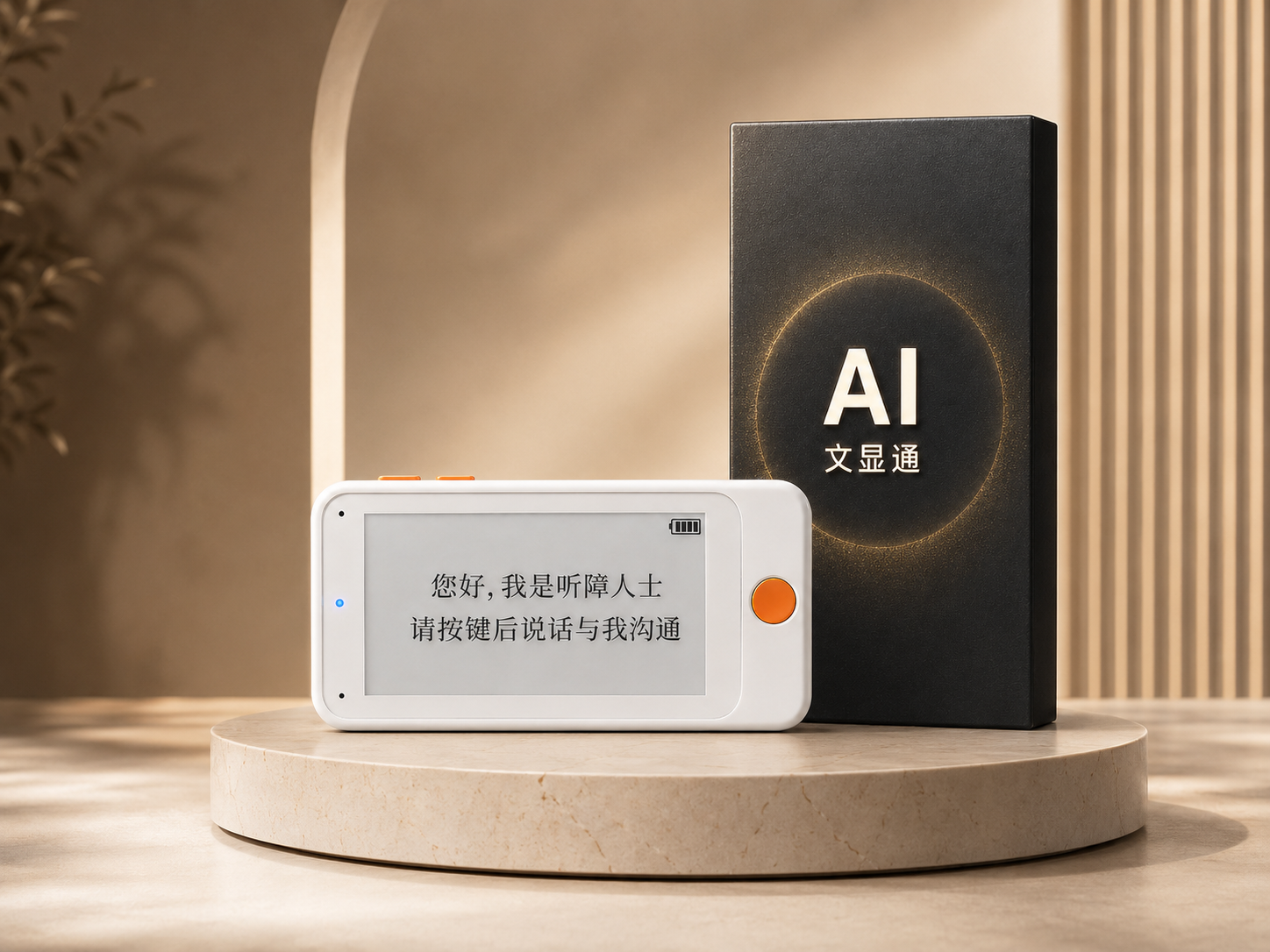
Privacy and security are the bottom lines the team upholds. Everyday conversations, medical consultations, and workplace communications all contain substantial personal and private information. Traditional cloud-based transcription devices require uploading voice data, creating a serious risk of information leaks and data misuse that discourages many users from trusting such tools. WenXianTong leverages its powerful local computing capability to process all data entirely on-device — voice capture, intelligent recognition, and text display are all completed locally without any cloud upload, eliminating privacy leak risks at the source and ensuring peace of mind with every conversation.
Battery life determines everyday practicality, while portability directly impacts user experience. WenXianTong delivers both long battery life and lightweight portability. Addressing the dual shortcomings of traditional assistive devices — high power consumption, short battery life requiring frequent charging, combined with bulky, inconvenient form factors — WenXianTong optimizes its chip power architecture and pairs it with low-power intelligent operation algorithms. While maintaining high-precision, low-latency transcription performance, it minimizes energy consumption to the greatest extent. A single full charge supports all-day high-frequency use, perfectly suiting users' uninterrupted needs for going out, working, and running errands — delivering long battery life, always ready to use. On the other hand, the device has been meticulously streamlined: compact, lightweight, and mini-sized, it can be effortlessly slipped into a pocket or backpack, truly achieving take-anywhere, carry-anywhere portability, unrestricted by setting or space, always ready to enable barrier-free communication. Building on solid performance, battery life, and portability, WenXianTong breaks free from the conventional model of hearing-impaired assistive devices to create a cost-effective, broadly accessible solution, filling the gap left by mainstream assistive devices that remain out of reach for many.

Currently, cochlear implants are the mainstream approach for restoring hearing in individuals with severe hearing loss. However, these invasive medical devices come with high barriers, high costs, and considerable risks, making mass adoption difficult. Even after national centralized procurement has brought prices down, the combined costs of the implant device, surgery, and rehabilitation support still run to tens of thousands of yuan, while imported high-end products can reach ¥100,000 to ¥300,000, with ongoing costs for maintenance, replacement parts, and system upgrades — an enormous burden for ordinary families. At the same time, cochlear implants require surgical implantation with inherent medical risks, followed by lengthy post-operative rehabilitation. Limited by age and physical condition, many hearing-impaired individuals cannot qualify for this option, falling far short of meeting the everyday communication needs of the broader population.
Leveraging the lightweight computing architecture of its self-developed chip and integrated hardware-software design, WenXianTong delivers a low-cost, non-invasive, risk-free, highly adaptable alternative. No surgery required, no medical qualification needed, no rehabilitation training — simply power on for accurate transcription. Elderly users, teenagers, and individuals with mild to severe hearing loss can all use it with confidence, completely circumventing the medical risks and qualification barriers of invasive devices. Compared to the high cost and long-term maintenance expenses of cochlear implants, WenXianTong is affordably priced with no additional post-purchase costs, using extreme value for money to break down the high-cost barrier of hearing assistive technology, enabling families with limited means to easily own a professional barrier-free communication tool — truly making technology accessible to every hearing-impaired user.
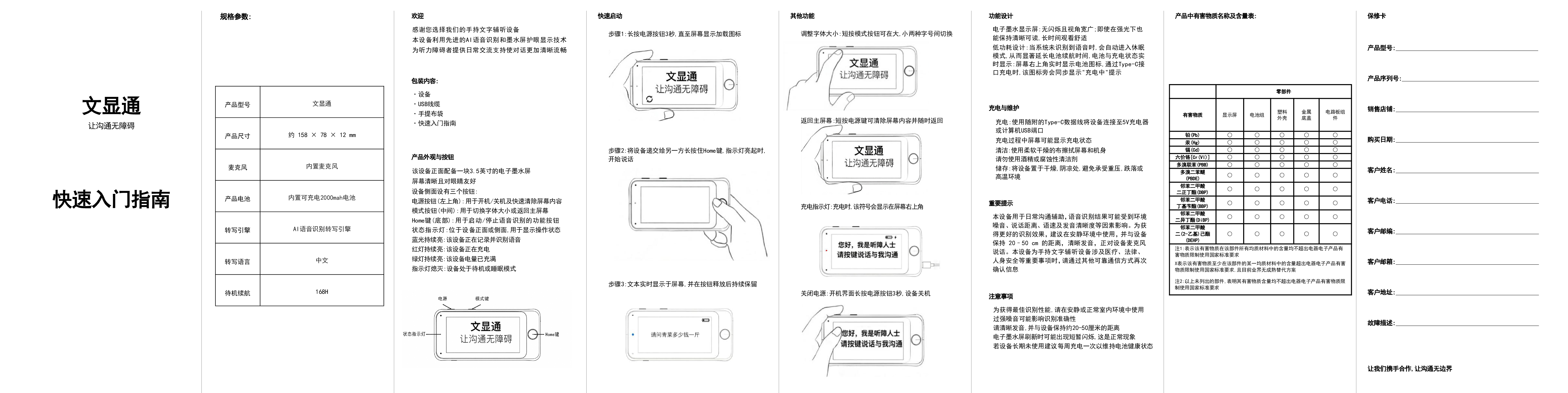
From core technological breakthroughs in self-developed inference chips and AI intelligent transcription algorithms, to meticulous hardware refinement in dual-mic noise reduction, eye-protecting E Ink display, and portable form factor, to comprehensive advantages in local privacy computing, long battery life, and low-cost accessibility — WenXianTong has always been rooted in genuine user needs, avoiding superficial feature stacking and focusing solely on solving real communication challenges. Once, countless hearing-impaired individuals missed job opportunities, drifted away from family and friends, and feared social situations because of communication barriers, trapped in a silent predicament. Today, the dual innovation of hardware and software, together with affordability and accessibility, has broken down the wall between the hearing and silent worlds, allowing hearing-impaired users to "see sound and understand conversation" in real time, integrating into life, work, and social circles with equality and ease.
The most moving value of technology lies in gently embracing every community. The innovation story of WenXianTong is not merely a technological iteration and product upgrade — it is a heartfelt practice of "tech for good." Rooted in hardcore self-developed technology and underpinned by humanistic care, it dissolves communication barriers between people with precise, secure, convenient, and durable barrier-free communication experiences, breaking through identity and scenario limitations. It empowers millions of hearing-impaired individuals to cast off the shackles of silence, confidently embracing a complete, equal, and beautiful life — illuminating every silent moment with light and warmth.