
Foreword
Over the past three decades, China's flexible printed circuit (FPC) industry has grown from a blank slate to possessing the world's largest production capacity, yet it has long been trapped in a cycle of homogeneous competition based on subtractive etching. Countless small and medium-sized FPC factories remain stuck in traditional manufacturing models marked by high pollution, high costs, and long lead times, grappling with rising raw material costs for copper foil and chemical solutions on one side, and increasingly stringent environmental regulations and downstream demands for lightweight, low-carbon products on the other. As a local Shenzhen manufacturer rooted in Bao'an Shajing for over a decade — Shenzhen Bochengxin Electronics Co., Ltd. — we chose to step out of the comfort zone of mature traditional production lines. With self-developed nano conductive paste at its core, the company spent several years tackling additive printed FPC technology, completing a manufacturing revolution from "subtractive etching" to "additive printing." Today, this innovative process has achieved stable mass production in two major tracks — ePaper and notebook Mini LED backlit keyboards — completely resolving core pain points in the ePaper industry: high cost of traditional FPC components, heavy process pollution, excessive module thickness, and lengthy delivery cycles. This article, from the founder's perspective, documents Bochengxin's complete journey from a traditional factory to a technology innovator, telling an original innovation story of staying rooted in manufacturing, committing to green production, and slashing costs and emissions for the ePaper industry.

I. Industry Impasse: Three Shackles of Traditional Subtractive FPC Force an Inevitable Process Revolution
In 2011, I founded Shenzhen Bochengxin Electronics Co., Ltd. in Shajing Subdistrict, Bao'an District, Shenzhen, with registered capital of RMB 10 million, a 4,000-square-meter factory, and nearly 200 employees. Our core business covered single-sided, double-sided, and multi-layer traditional subtractive FPCs with supporting SMT processing. In the early years, strong demand from consumer electronics, notebooks, and industrial control equipment allowed us to gain a foothold in notebook keyboard backlight FPCs, industrial touchpads, and similar products. Over the course of more than a decade, the company sequentially obtained ISO9001, IATF16949, and ISO14001 certifications, was recognized as a National High-Tech Enterprise and a Shenzhen Specialized & Sophisticated SME, and holds over 20 utility model patents — establishing itself as a local FPC manufacturer with reliable delivery capability in its niche.
However, starting in 2020, the survival environment of the entire FPC industry underwent fundamental change. Three shackles tightly bound all small and medium-sized manufacturers, and Bochengxin was equally trapped.
Shackle One: The inherent high pollution and high energy consumption of traditional subtractive processes, with environmental compliance costs continuously soaring. Traditional subtractive FPC relies on flexible copper-clad laminate (FCCL) as the base material. The complete production process encompasses over ten wet-chemical steps — cutting, drilling, dry film lamination, exposure, development, etching, stripping, and immersion gold surface treatment — consuming large quantities of copper salts, developer, etchant, and precious metal gold-plating solutions throughout. The process continuously generates heavy-metal wastewater and hazardous organic sludge. The MIIT's 2023 "Regulatory Conditions for the PCB Industry" significantly tightened standards for flexible board energy consumption, wastewater recycling, and hazardous waste management. The 2025 draft revision further introduced hard targets for carbon emissions per unit product, copper recovery rate ≥95%, water reuse rate raised to 50%, and restrictions on PFAS persistent pollutant usage.
Shackle Two: Persistently high raw material costs and cutthroat price competition driven by product homogeneity. The core subtractive-process base material FCCL is heavily dependent on copper foil, whose price is chronically volatile. Over 90% of copper material is corroded into waste liquid during the etching process, yielding a material utilization rate below 30% — a staggering waste of raw materials. Downstream customers in notebooks, ePaper, and wearables keep pressing for lower prices. The low-end FPC market has low entry barriers, with numerous small factories flooding in and engaging in price wars, plunging the industry into a paradox of "growing volume without growing revenue." For ePaper-related FPC specifically: demand for ESLs, eReaders, and retail smart labels has been rising year after year, yet traditional FPC unit prices remain stubbornly high, and module thickness is hard to compress — constraining large-scale ePaper product adoption. Downstream panel makers have repeatedly called for lightweight, low-cost, low-carbon supply chain upgrades but could not find a mature process solution to deploy.
Shackle Three: Excessively long, fragmented production cycles incapable of meeting ePaper's fast iteration, ultra-thin, and miniaturized requirements. A complete production cycle for a conventional double-sided subtractive FPC lasts 6-7 days or more, with dispersed, segmented processes and low sheet-line efficiency. Meanwhile, the ePaper industry is advancing toward large sizes, colorization, ultra-thin portability, and flexible bendability — posing three rigid requirements for companion FPCs: extreme thinness, high bending reliability, and rapid prototyping and delivery. Finished traditional etched FPCs are thick; multi-layer film stacks consume module interior space. Complex circuit prototyping cycles stretch to 4-5 days. Faced with rapid new product iteration and high-mix, low-volume orders from ePaper customers, traditional processes are completely incapable.
In 2024, organized by the ePaper Industry Alliance, we visited several leading ePaper companies — Hanshow, YesTech, QY, HKC, BOE — for in-depth discussions on industry pain points. Customer feedback pointed to the core issue: ePaper pursues low power consumption, lightweight design, and sustainability; traditional etched FPCs are bulky, highly polluting, and costly — fundamentally conflicting with ePaper's green development ethos. The industry urgently needs a completely new flexible circuit manufacturing solution. Bolstered by the confidence from these discussions with leading ePaper enterprises and alliance members, I made a firm decision: we could no longer cling to a mature but backward subtractive process. We had to independently develop an entirely new FPC manufacturing technology — one that is wet-process-free, low-energy, low-cost, ultra-thin, and flexible: namely, the additive printed flexible circuit process.
At the time, the mainstream industry view was not optimistic about this route. The world's first PCB was made using an additive printing process back in 1926, but it was subsequently replaced by etching due to precision limitations. Nearly a century later, attempting to replicate or even surpass traditional FPC precision through printing technology would require enormous investment with an extremely high risk of failure. No mature mass-production equipment existed on the market, suitable nano conductive paste was entirely dependent on imports, and the R&D timeline was impossible to predict. Internal divisions also emerged within the company: existing traditional production lines were generating stable profits; investing tens of millions of RMB in new process R&D could drag down the entire business if it failed. But I have always believed that the converging trends of dual-carbon policies, green transformation of the electronics industry, and downstream demand for lightweight terminals make additive printed FPC the inevitable direction for FPC industry upgrading — and the optimal solution for the ePaper industry to break through cost and environmental barriers. Innovation in manufacturing cannot be judged by short-term returns alone; one must position for the long-term track.
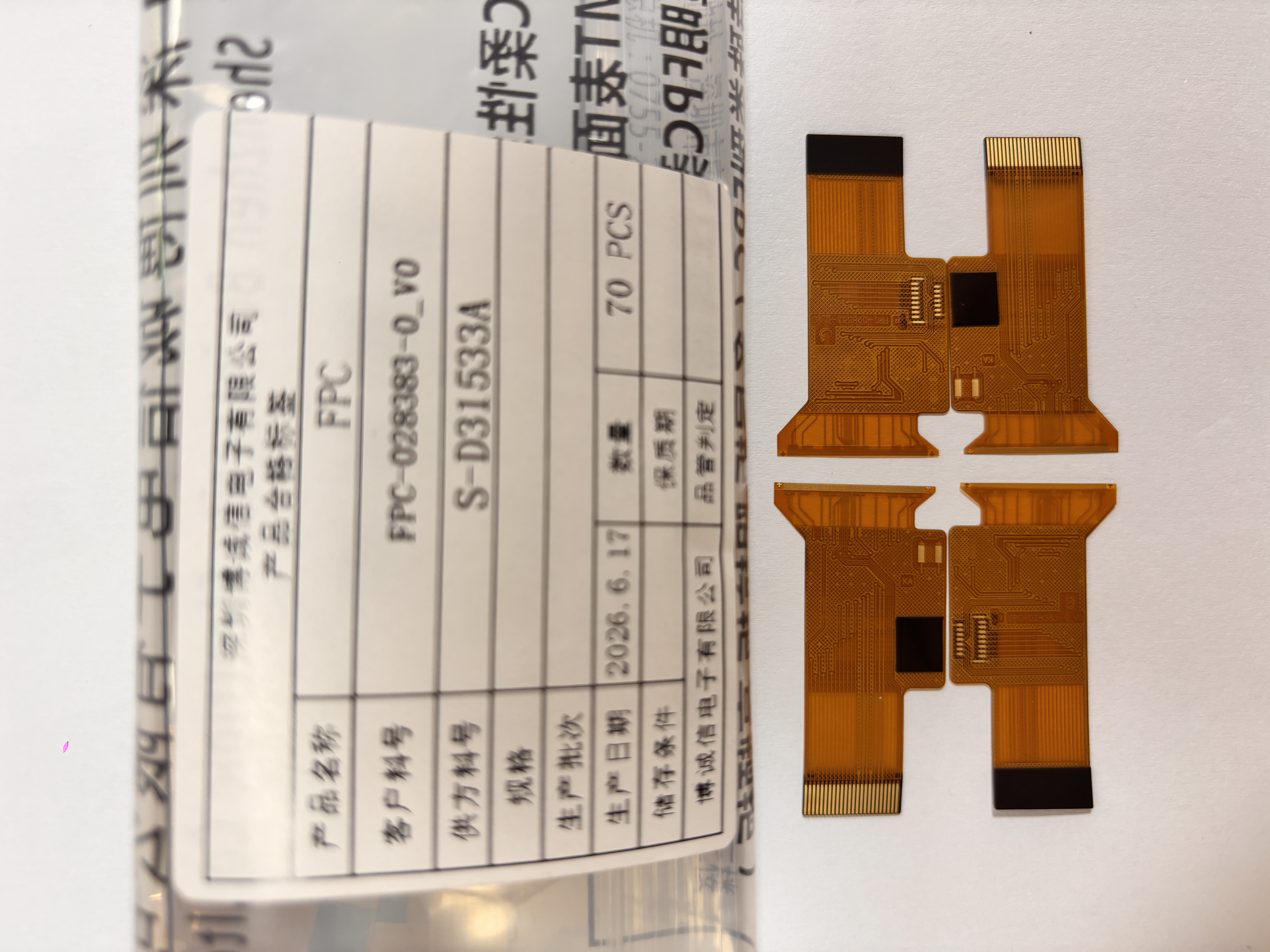
II. Three-Year Breakthrough: Building the Full Additive Technology Chain from Scratch, Overcoming Materials, Equipment, and Process Hurdles
At the beginning of 2023, Bochengxin formally established a dedicated additive-method R&D team, assembling core engineers from process, equipment, materials, and quality disciplines — launching a three-year technology offensive. The entire R&D process was divided into three major phases, in which we tackled three core challenges one by one: nano conductive paste formulation, custom non-standard automated printing equipment, and double-sided circuit interconnection printing processes.
1. Materials Breakthrough: Self-Developed Silver-Copper Composite Nano Paste, Breaking Free of Imported Material Monopoly
The core foundation of the additive process is conductive paste. In the early phase, we tested imported silver and copper pastes and discovered three fatal flaws: first, excessively high curing temperatures incompatible with PET flexible substrates commonly used in ePaper; second, poor adhesion — after bending tests, traces easily detached and resistance drift exceeded specifications; third, prohibitively high unit prices that could not achieve cost reduction at scale. The R&D team spent 18 months repeatedly adjusting nano metal powder ratios, resin carriers, and dispersing additives to independently develop silver paste, copper paste, and silver-coated-copper composite nano paste tailored for the printing process. The new paste achieves low-temperature curing and can reliably form traces on any insulating substrate — PI or PET. Trace adhesion and bending resistance pass industry standard tests. At the same time, the self-developed paste reduces procurement cost by 40% compared to imported materials, solving the mass-production cost challenge at its source. Addressing the via-filling and interconnection requirements of ePaper double-sided FPCs, we specifically optimized paste filling performance to achieve complete laser blind-via filling with stable and controllable via resistance, perfectly matching the dual-layer circuit transmission needs of E Ink screens.
2. Custom Equipment: Non-Standard Sheet-to-Sheet and Roll-to-Roll Fully Automated Printing Lines, Achieving Double-Sided Circuit Formation in 2 Hours
Conventional printing equipment can only produce simple single-sided circuits and cannot meet FPC requirements for high precision, double-sided interconnection, and continuous roll-to-roll production. We partnered with equipment manufacturers to customize fully automated double-sided sheet and roll-to-roll printing production lines, integrating unwinding, precision printing, low-temperature curing, laser drilling, via filling, and AOI automated inspection into a single streamlined process — completely eliminating the full suite of traditional etching wet-chemical steps. Traditional subtractive FPC requires 24 hours to complete double-sided circuits; our custom additive production line completes the entire double-sided circuit process in just 2 hours — a 12x improvement in delivery efficiency. Automated flow lines reduce manual intervention; output per unit area increases by 300%, making capacity per equivalent factory floor space 3x that of traditional processes — significantly saving factory floor space and land resources. It perfectly matches ePaper's order patterns of small batches, rapid prototyping, and flexible switching to large-volume production.

3. Process Reconstruction: Eliminating 80% of Wet-Chemical Steps, Establishing a Fully Dry Green Manufacturing System
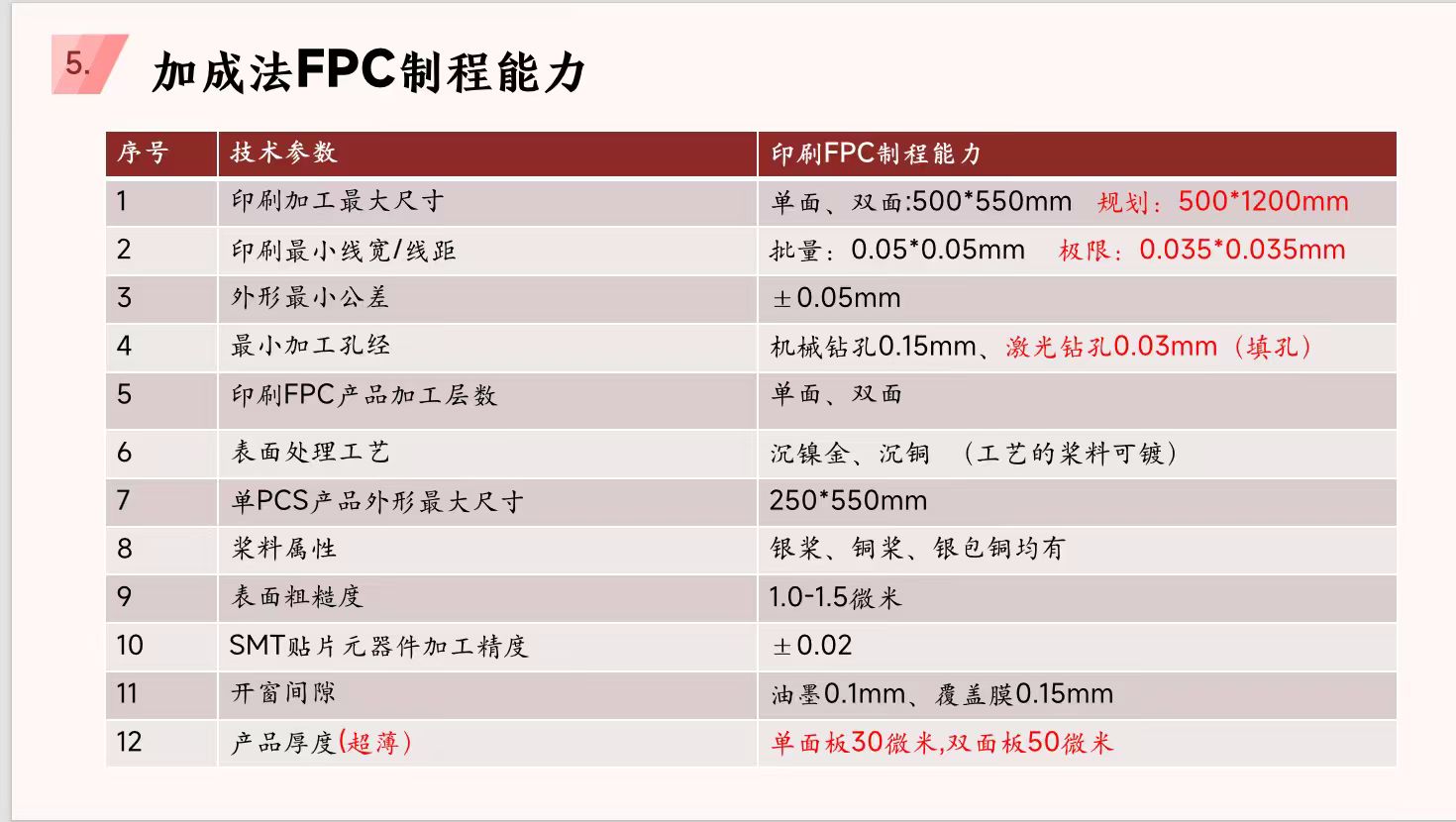
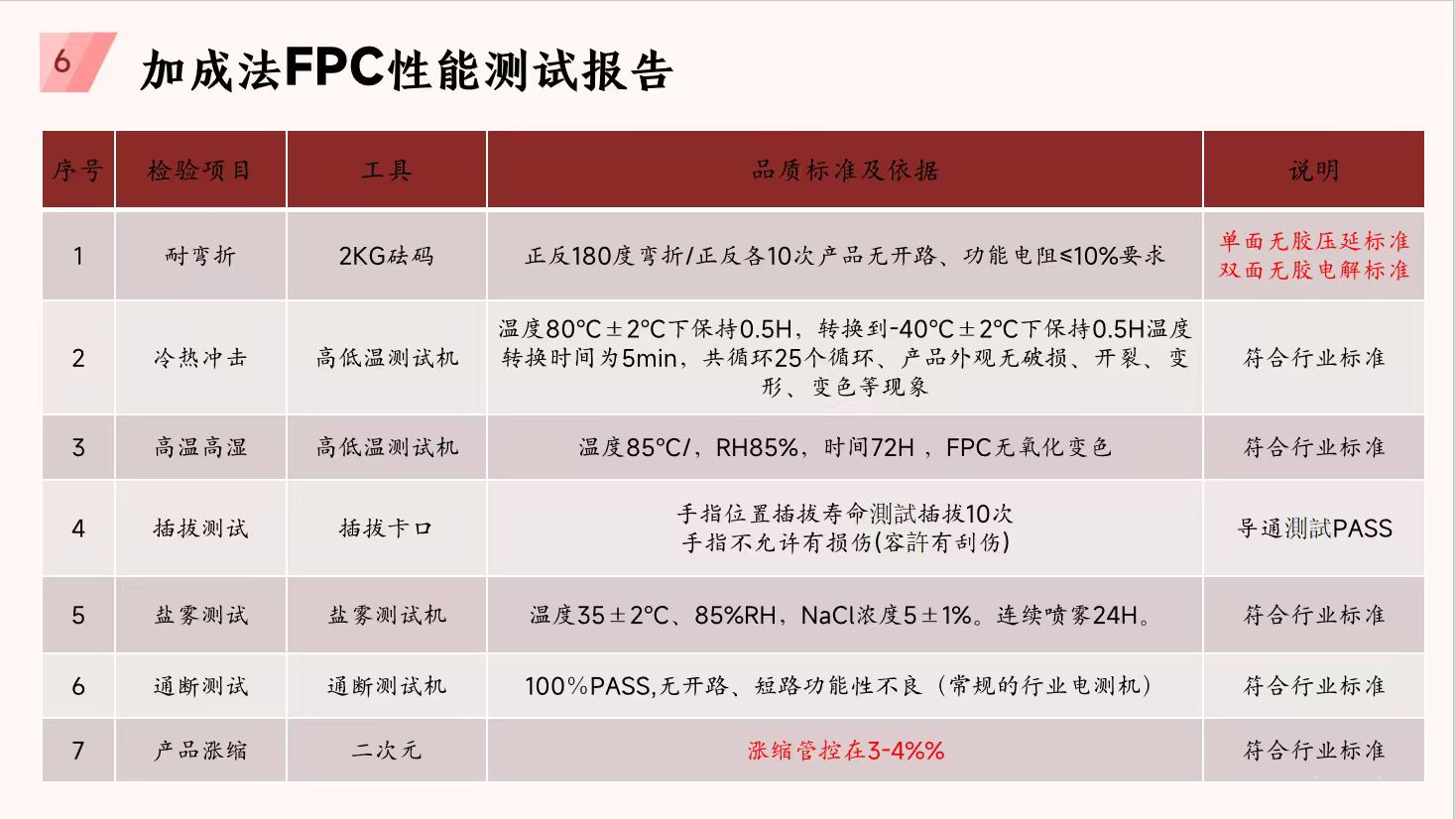
We comprehensively restructured the FPC manufacturing workflow, consolidating the traditional subtractive method's 8 major complex steps into 5 core steps — fundamentally changing the manufacturing logic. Traditional processes require purchasing FCCL copper-clad laminates, then completing drilling metallization, exposure etching, and immersion gold surface treatment through multiple wet-process stages. The additive method directly uses PI/PET insulating film as the substrate, forming fine traces and vias in a single printing pass — no FCCL base material needed, no black-hole copper plating, no etching/development, no immersion gold or OSP surface treatment. The entire process generates zero heavy-metal wastewater and zero hazardous etching waste liquid, achieving a truly fully dry, zero-discharge manufacturing process. Process optimization brings comprehensive performance improvements: additive single-sided board thickness is only 30μm, double-sided 50μm — far thinner than traditional etched FPCs — fitting ePaper's ultra-thin module designs. In mass production, minimum line width/space reaches 0.05mm, with ultimate precision of 0.035mm and outline tolerance of ±0.05mm, meeting ePaper's high-resolution driver circuit fine-routing requirements. The full product line passes complete reliability testing: 2kg weight 180° forward/reverse bending 10 cycles with no open circuits; 85°C/85RH high-temperature high-humidity for 72 hours with no oxidation; 24-hour salt spray test pass — fully meeting ePaper's stringent quality standards for long-term stable operation.
The R&D road was littered with setbacks — countless sample failures, paste cracking, poor circuit continuity, and substandard printing precision occurred repeatedly. Throughout 2023, the R&D team practically lived in the lab and pilot production workshop, daily adjusting paste ratios, printing pressure, curing temperatures, and laser drilling parameters — cumulatively prototyping over a thousand test samples and scrapping various base materials and paste worth over a million RMB. In June 2023, we officially debuted additive printed FPC technology at Lenovo's New Process & New Materials recommendation conference, completing stable single-sided board pilot production that same year. By June 2025, double-sided additive FPCs fully passed verification, and double-sided boards for e-cigarettes and ePaper achieved mass delivery. During the same period, the company added over ten additive-process-related patents, becoming a leading domestic enterprise in additive printed FPC patent holdings.
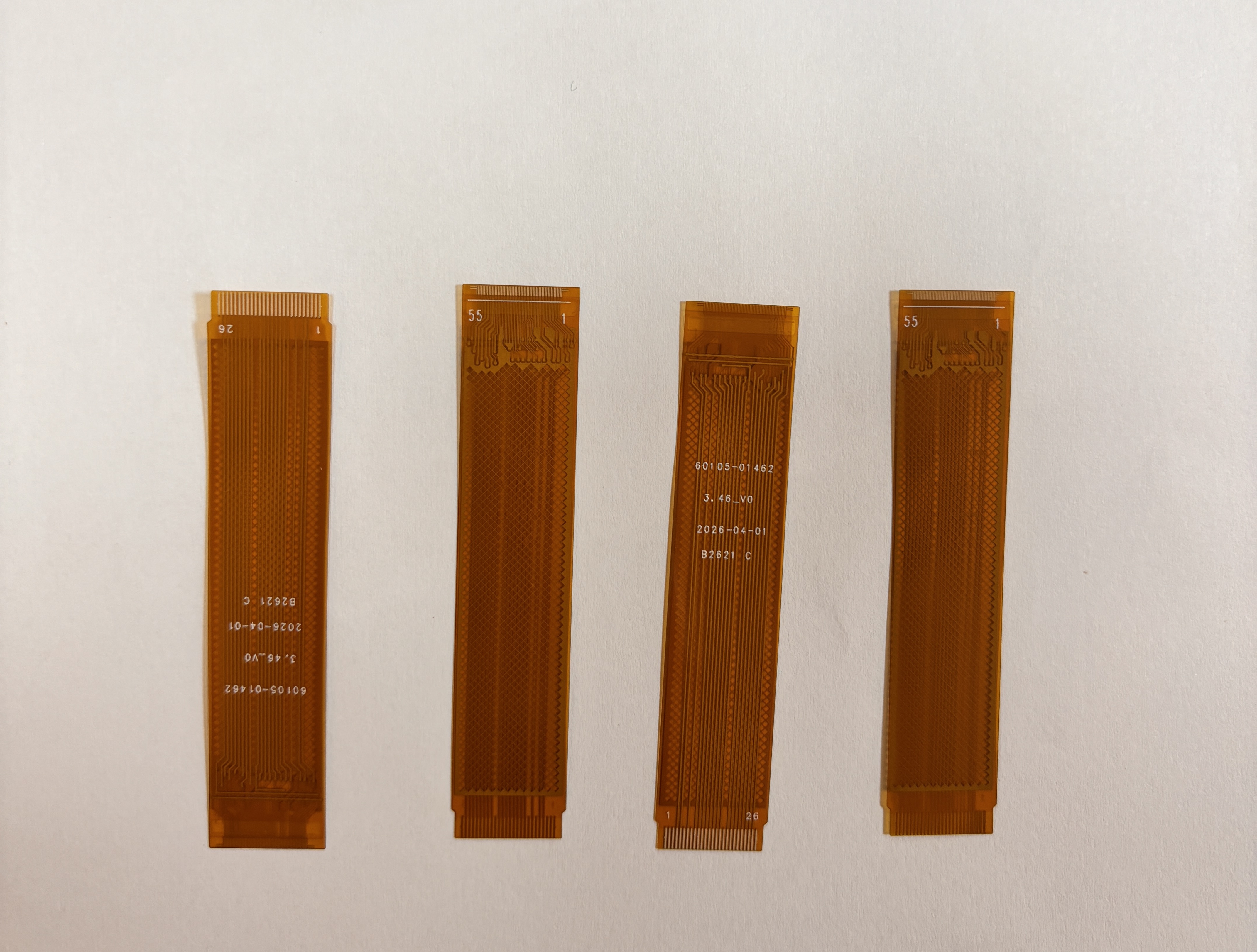
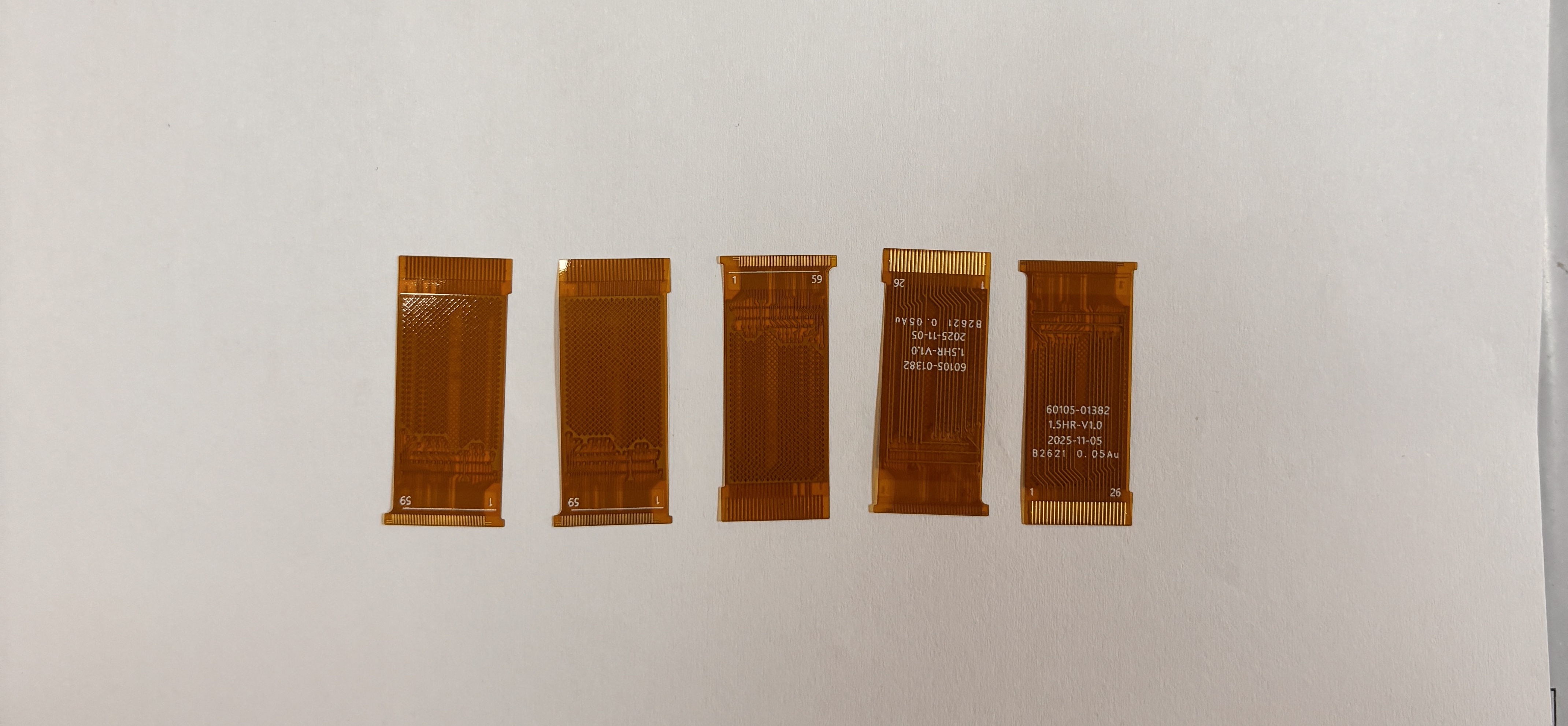
III. Landing in the ePaper Track: Four Core Values, Reshaping the ePaper Green Supply Chain System
Once the technology achieved mass production, we immediately deployed the additive process in the ePaper industry, developing dedicated double-sided printed FPCs for ESLs, eReaders, E Ink display backplanes, retail smart labels, and handwriting ePaper products — thoroughly resolving the four long-standing pain points of cost, environmental impact, thinness, and delivery, bringing transformative change to the ePaper industry.
1. Maximum Cost Reduction and Efficiency Gains, Accelerating ePaper Commercialization
Compared to traditional subtractive FPCs, the additive method directly reduces overall manufacturing cost by over 15%, raises material utilization above 70%, and eliminates multiple expense categories — FCCL copper-clad base material, precious metal surface treatment, and hazardous waste wastewater treatment. ePaper terminal manufacturers see significantly lower procurement costs, easing the industry-wide challenges of high prices and slow market penetration for color ePaper and large-format ESLs. Our current ePaper FPC monthly capacity reaches 7,000–8,000 square meters, reliably accepting double-sided circuit orders for E Ink screens of various sizes and adapting to the industry's scaling-up demands.
2. Full-Chain Green and Low-Carbon, Aligned with ePaper's Sustainability DNA
ePaper itself is regarded as a green display medium for its low power consumption, reusability, and blue-light-free characteristics — but traditional companion FPCs' high-pollution manufacturing creates a weak link in the industry chain's environmental performance. The additive process eliminates etching and electroplating wet steps at the source; the entire production process generates zero wastewater and no heavy-metal hazardous waste. Production energy consumption is reduced by 70% versus traditional processes, carbon emissions drop by 50%, precious metal (copper, etc.) consumption approaches zero, and water reuse demand falls to a minimum. The entire process fully complies with RoHS, REACH, and the Electronics Industry Water Pollutant Discharge Standard GB 39731-2020. It can assist ePaper enterprises in completing full-product carbon footprint accounting and meeting global brand ESG and carbon-neutral supply chain audit requirements. As the global electronics industry comprehensively rolls out green supply chains, this zero-pollution additive process fills the green manufacturing gap in the ePaper industry chain and clears environmental barriers for ePaper brand exports overseas.

3. Ultra-Thin, Flexible, High Reliability — Adaptive to ePaper Form-Factor Innovation
ePaper is evolving toward rollable, foldable, and ultra-thin portable form factors. Traditional multi-layer stacked FPC thickness consumes module interior space and constrains slim product design. Additive FPC double-sided boards measure only 50μm — eliminating multi-layer copper foil and surface treatment stack structures — dramatically reducing overall ePaper module thickness. At the same time, the printed circuit base material offers exceptional flexibility and outstanding bending resistance, accommodating flexible ePaper rollable installation requirements and replacing traditional thick copper wires, reducing module interior space occupation and improving eReader and smart label portability. For medical monitoring ePaper sensor devices, the additive process's miniaturized circuit advantages stand out, enabling ultra-thin sensor backplane fabrication for ECG monitoring and blood glucose detection, balancing comfort with long-term monitoring stability.
4. Integrated Capability, Delivering One-Stop ePaper Solutions
Leveraging the company's in-house SMT production line, additive FPCs can have driver ICs and NFC sensing components directly mounted after circuit printing is completed, achieving integrated FPC + component formation in a single pass — eliminating the traditional secondary SMT step after FPC shipment, simplifying ePaper module assembly and reducing end-customer assembly labor costs. For retail NFC-enabled ESLs, we developed double-sided additive FPCs with integrated NFC sensing circuits, offering stable read/write performance and ultra-thin profiles.
From 2025 to date, Bochengxin's additive ePaper-specific FPCs have achieved stable volume shipments. Customer feedback confirms that product yield, reliability, and cost all outperform traditional etched products. Multiple ePaper companies have simultaneously initiated production line switchover verification. The market space for additive flexible circuits in the ePaper track continues to open up. Industry data projects that by 2030, the global FPC market will reach USD 30.5 billion, with additive processes capturing an 8%-10% share — roughly USD 3 billion — of which China accounts for 60%-70%. ePaper, Mini LED, and medical electronics are the core growth tracks for additive methods, with vast market expansion potential.
IV. Staying True to the Original Vision: A Niche-Track Innovation Leader, Pursuing a Long-Term Industrial Future Through Original Processes
Looking back on Bochengxin's decade-plus journey — from establishing the factory in 2011 making traditional subtractive FPCs, to deciding in 2023 to independently develop additive innovative processes, to today's mass production in both ePaper and notebook keyboard domains — what sustained us through this difficult innovation path is the vision established at the company's founding: "Commit to being an innovation leader in niche segments, drive industry transformation through additive FPC process innovation, create value for customers, and build platforms for employees."
As a local private manufacturing enterprise rooted in Shenzhen's Bao'an District, we deeply understand that for small and medium-sized manufacturers to break through, they cannot rely on low-price competition — only original technology and differentiated innovation can build a long-term moat. In the notebook keyboard niche track, we are already the pioneer of stainless-steel FPCs and Mini LED backlight printed FPCs, first to achieve mass production of single-key independent-light-source Mini LED keyboard FPCs, with module thickness compressed to 0.3mm and backlight power consumption reduced by 65% — extending notebook battery life by up to 3.5 hours — serving the supply chains of Lenovo, Huawei, Dell, and Apple. The ePaper track is the new core battlefield for our green process deployment. We hope to leverage our independently developed additive printing technology to drive the entire ePaper industry chain's low-carbon upgrade.
Innovation is never a shortcut achieved overnight but a commitment to long-term perseverance. Through three years of R&D, we withstood financial pressure, technical failure risks, and market skepticism, steadfastly mastering the full suite of core technologies — paste, printing, via filling — without relying on external technology licensing. We have cumulatively obtained dozens of additive-process-related patents and are one of the few domestic enterprises with double-sided roll-to-roll additive FPC mass production capability. Looking ahead, we will continue increasing R&D investment along two major directions: first, optimizing conductive paste performance and developing highly transparent conductive inks to expand into transparent ePaper and transparent display FPC markets; second, upgrading ultra-large-format roll-to-roll printing lines, planning 500×1200mm large-format processes to meet the demands of large-size commercial ePaper and industrial display panels.
At the same time, we always keep in mind the social responsibility of manufacturing enterprises. The water pollution and heavy-metal pollution caused by traditional etching processes are painful issues the entire electronics manufacturing industry cannot avoid. The additive fully dry process not only helps enterprises reduce environmental compliance burdens but also provides downstream ePaper and consumer electronics brands with a genuinely green and sustainable supply chain choice, contributing to China's dual-carbon goals and implementing the MIIT's green manufacturing upgrade requirements for PCBs. We are committed to continuously promoting the zero-pollution additive printing process, driving synchronized green transformation of upstream and downstream base materials, equipment, and paste supply chains, and promoting the overall phase-out of high-pollution legacy etching lines in the FPC industry.
For the ePaper industry, thinness, low consumption, and green credentials define the long-term development trajectory, and companion flexible circuits are core components determining product cost, form factor, and environmental attributes. Bochengxin's additive printed FPC innovation is not merely the company's own technological breakthrough — it provides the entire ePaper industry with a completely new foundational manufacturing solution. This application for the 2026 ePaper Innovation "First Launch" Award under the Electronics Industry Alliance is both a summary of our three years of technological achievement and a hope that, through this nomination, we can promote additive green manufacturing processes across the industry and attract more industry chain partners to jointly explore the infinite possibilities of printed flexible electronics.
Conclusion
A century ago, the world's first PCB was made using an additive printing process. Today, a century later, Bochengxin — standing on Shenzhen's local manufacturing foundation — has revived the additive process through a triple innovation in nano materials, precision printing, and automated production lines, completing a retro-innovation in flexible circuit manufacturing. The journey from a traditional subtractive etching factory to an additive green FPC innovation leader has been filled with challenges, yet profoundly meaningful.
Going forward, Bochengxin will always uphold the core value of "customer-centric, results-oriented," continuing to deepen its presence in four niche tracks: ePaper, notebook Mini LED, medical sensing, and automotive flexible electronics. We will relentlessly iterate and optimize the additive printing process, using original green manufacturing technology to enable low-cost, lightweight, and low-carbon mass adoption of the ePaper industry, writing a new chapter for China's flexible electronics manufacturing through industrial innovation. We firmly believe that only through continuous process innovation and steadfast commitment to green and sustainable development can Chinese manufacturing hold core sway in the global electronics industry chain and stride toward an even farther future.