I. A Pain Point Taken for Granted
In early 2025, in the R&D lab of Jinyatai Technology, engineers were testing the local refresh performance of a color ePaper digital signage display. On the screen, a bus route information area needed to update its arrival times — one of the most typical use cases for ePaper. However, when the local refresh completed, an intern engineer casually remarked: "The display updated, but it felt like it just 'snapped' into place. It would be nice if it had a transition animation like smartphones do."
This seemingly naive question sparked a months-long technical research effort.
Since its inception, the core logic of traditional ePaper local refresh technology has remained unchanged: detect which screen regions have pixel changes, drive only those regions' charged particles to rearrange, and leave other areas untouched. This logic was nearly perfect in the era of black-and-white text display — it significantly reduced power consumption, shortened refresh time, and minimized visual flicker. But as ePaper entered the full-color era and moved into medium-to-large commercial display applications, the experiential shortcoming of "refreshing content without transitions" began to surface.
In retail digital signage scenarios, when promotional posters switch, the "hard jump" of local areas appears unprofessional. In bus stop display scenarios, when arrival information updates, users need to carefully identify the differences between old and new information. Yet, the industry seemed to have accepted this "jump" as a given — after all, the physical characteristics of ePaper prevent it from achieving the high-speed refresh of LCD, and pursuing "animation effects" was considered an unrealistic expectation that defied the laws of physics.
Jinyatai Technology refused to accept this "taken for granted." They asked themselves: Must local refresh necessarily come at the cost of a "hard jump"? Could we, within the physical limits of ePaper, create a "local refresh with transitions"?

II. Technical Breakthrough: From "Functional" to "Usable"
Finding the answer proved far more difficult than anticipated.
The working principle of ePaper dictates that refresh is fundamentally "particle migration" — black, white, and colored particles move up and down under electric field drive, combining to form the target image. Every refresh is a rearrangement of particle positions. Traditional local refresh is "hard" because the driving waveform contains only instructions to go "directly from state A to state B," with no transitional control in between.
"Our initial idea was simple: could we insert some intermediate-state waveforms into the local refresh waveform sequence, allowing particles to gradually migrate to their target positions, thereby creating a gradient-like visual effect?" recalled project lead Lu Xiaoguang. "But we soon discovered this approach didn't work — ePaper particle migration is not linear. Inserting intermediate states would intensify particle oscillation, actually increasing ghosting and flicker."
The breakthrough came when the team reexamined their FPGA hardware platform. Jinyatai Technology had already accumulated deep expertise in ePaper display driving, with their proprietary Mygica-Flex display driving technology and Waveform intelligent waveform algorithm successfully addressing full-screen refresh flicker. The team realized that implementing local refresh with dynamic effects could not rely on simple waveform-level stacking — it required a fundamental architectural redesign at the TCON (timing controller) level.
The core innovation emerged from this: the team developed an FPGA-based 8-bit grayscale template mapping phase offset technology, combined with a dual-dimension lookup table algorithm, achieving "pixel-level timing control" over local refresh areas. In plain terms, this technology enables the TCON to precisely control the refresh timing and phase offset of every pixel within the local refresh area — even when all pixels share the same "start state" and "end state," their transition can be controlled through staggered refresh start times and speed curves, creating layered transition animation effects.
For example, the "gradient effect": from the top-left corner to the bottom-right corner, each pixel's refresh start time is delayed by tens of milliseconds in sequence, visually creating a "left-to-right gradual reveal" effect. The "ripple effect" uses the center of the refresh area as the origin, with pixel refresh start times radiating outward in concentric circles. All these effects are executed only within the local area where content changes — unchanged areas remain static, keeping both power consumption and flicker to an absolute minimum.
In August 2025, at the Shenzhen International IoT Exhibition, Jinyatai Technology publicly showcased an ePaper digital signage equipped with this technology for the first time. Attendees witnessed with their own eyes the local area of an ePaper screen updating content with a "water ripple" effect, while the surrounding areas remained completely still — an experience never before seen in the ePaper industry. One exhibiting technical lead exclaimed: "We chose ePaper for its low power consumption, but always felt the display quality was 'a bit lacking.' This local effect refresh gives ePaper a sense of premium quality for the first time." Mr. Zuo Qiang, Secretary-General of the ePaper Alliance, highly praised the technology after observing the local effect refresh demonstration: "This is a remarkable technological innovation that gives the ePaper industry a brand-new capability to create innovative products. It is an outstanding contribution to the development of the ePaper industry."

III. From Lab to Industrialization
Technological innovation is only the first step. To move this technology from the lab to large-scale application, it needed to pass rigorous industrialization validation.
In October 2025, Jinyatai Technology's paper, "Design of Dynamic Display Transition Effects for E Ink Spectra 6 Full-Color ePaper Based on FPGA," was officially published in the national-level journal "Information Technology and Standardization." The experimental data disclosed in the paper provided quantitative support for the technology's reliability and performance advantages:
Flicker rate controlled within 4Hz, far below the human-perceptible flicker threshold;
Ghosting rate not exceeding 0.8%, on par with traditional refresh solutions, with no degradation from effect layering;
Local power consumption reduced by over 40% — because the effect control did not increase driving energy, but rather reduced ineffective particle oscillation through optimized timing design.
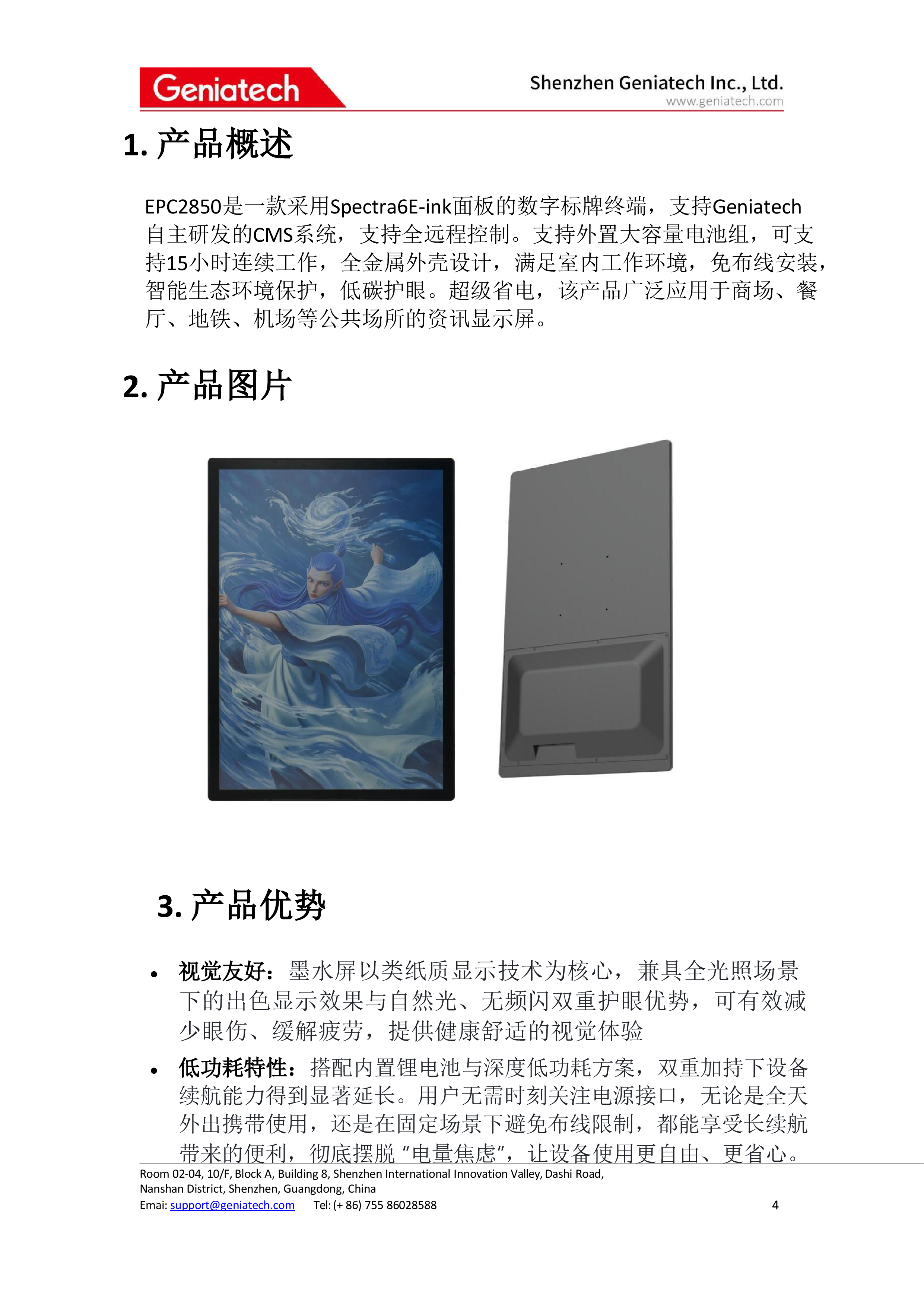
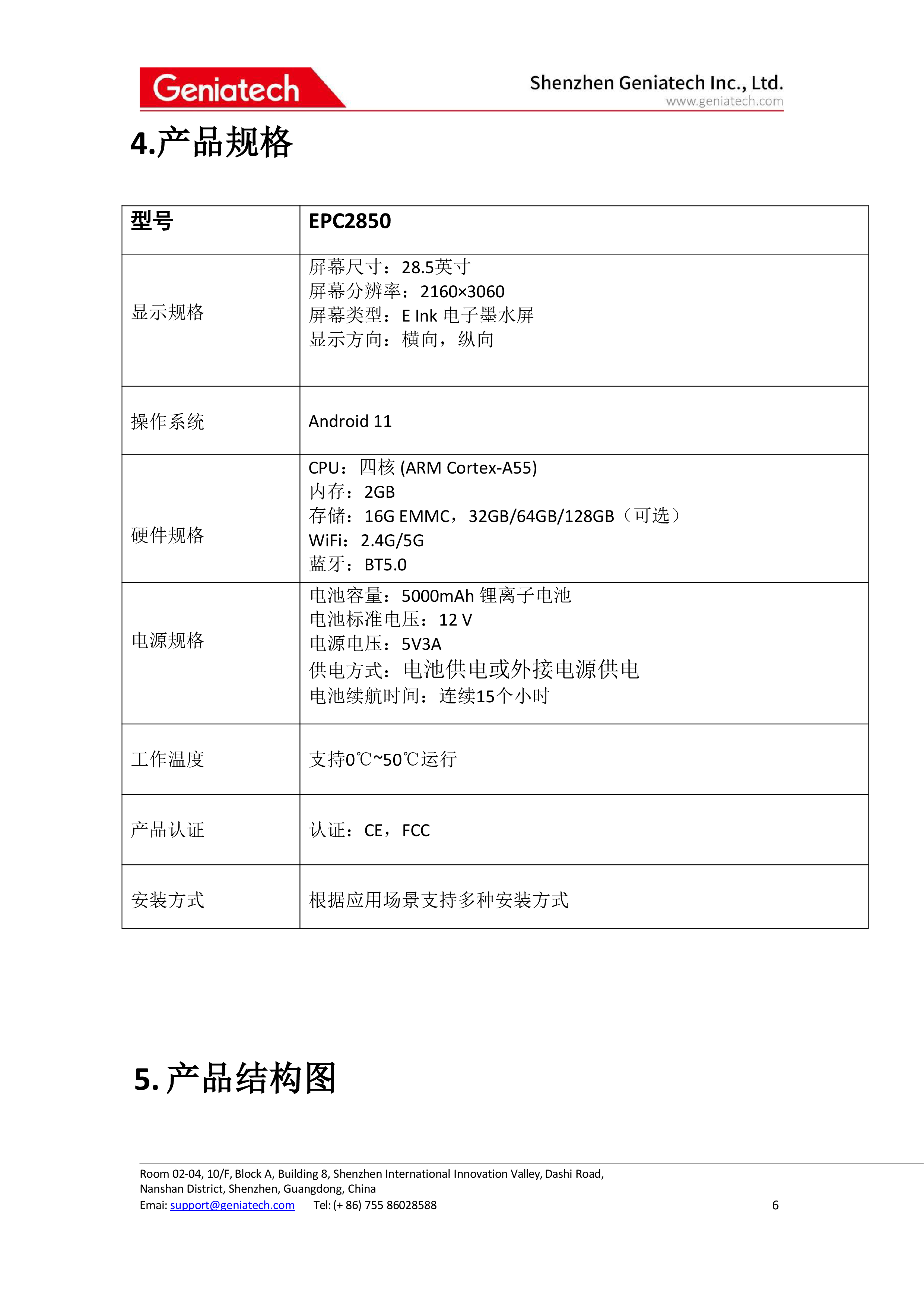
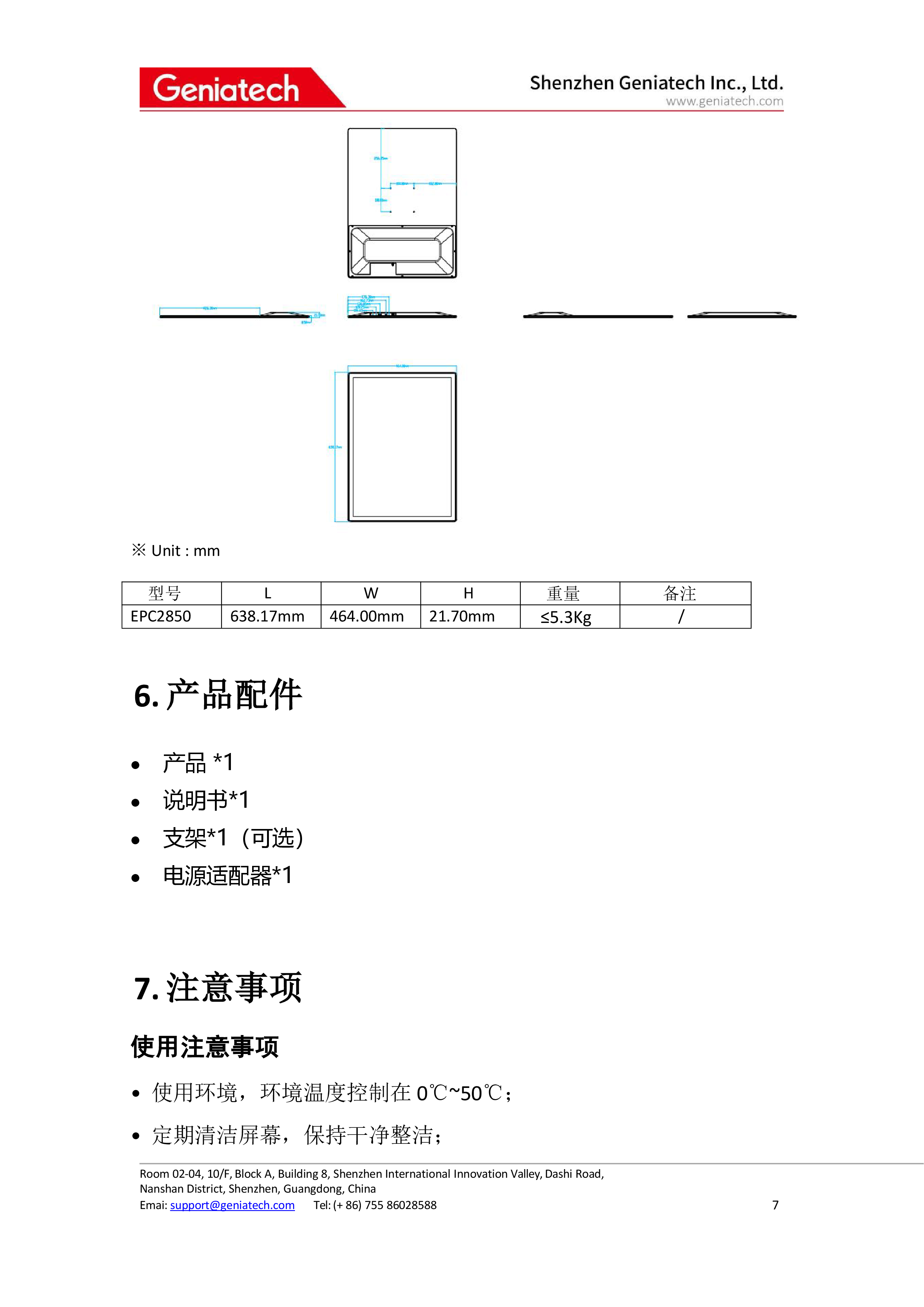
These data demonstrate that local effect refresh technology significantly improves user experience without "sacrificing ePaper's core advantages (low power, low flicker)." Meanwhile, the technology has been implemented across Jinyatai Technology's full range of medium-to-large ePaper products: 10-inch to 28.5-inch digital signage, single-board multi-screen bus stop displays, ePaper photo frames, and more. At international exhibitions including CES, ISE, Embedded World, and COMPUTEX in 2026, these products garnered widespread attention from global customers, with multiple leading international retail and transportation companies expressing cooperation interest.
More importantly, this technology has substantially expanded the interaction boundaries of ePaper. In commercial digital signage, local updates of brand advertising visuals can now be paired with brand-style effect transitions, enhancing the professionalism and appeal of commercial displays.

IV. Opening New Possibilities for the ePaper Industry
Looking back at the development of ePaper technology — from black-and-white to color, from static to dynamic refresh, from small to large sizes — each breakthrough has expanded its application boundaries. The significance of Jinyatai Technology's local effect refresh technology for the ePaper Innovation Gold Award may lie in this: it has, for the first time, introduced "experience design" thinking into the ePaper display field.
Previously, technological innovation in the ePaper industry focused primarily on "display performance" — higher refresh rates, lower power consumption, richer colors. This was certainly the right direction. But once these foundational performance metrics reach a certain level, "user experience refinement" becomes the new competitive dimension. Local effect refresh technology is a pioneering exploration in this direction — it does not solve the problem of "whether it can display," but rather "whether it displays well, whether it is elegant."
As the engineer's question that sparked this technical breakthrough reveals: user expectations for ePaper have evolved from "functional" to "usable" and even "enjoyable to use." Local effect refresh technology is precisely an industry-first born in response to this user demand upgrade, opening new possibilities for deeper application of ePaper in retail, transportation, office, education, and other scenarios.