
MOBEN · PRODUCT ORIGIN STORY
When a Question First Appears
From a follow-up question while AI was writing code
to a pure entry point handed to young people
Making every spark of curiosity easier to begin.
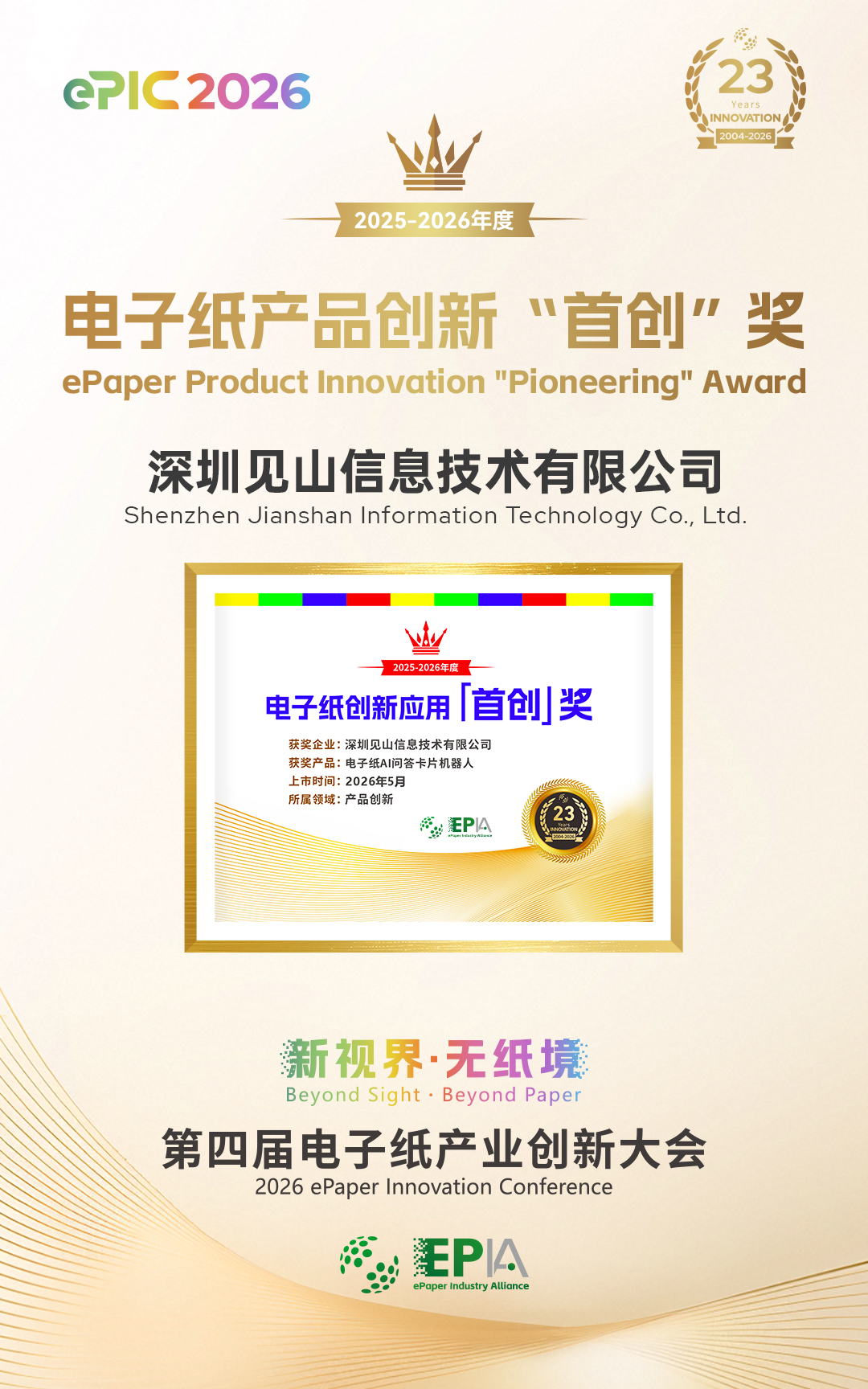
Shenzhen Jianshan Information Technology Co., Ltd.
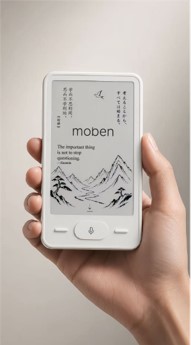
We only understood later that the story of MOBEN MB-1 did not start with an education hardware plan, nor with the question of what else could be added to the market. It started with an entirely ordinary moment at work: a question had just surfaced in the mind, and there was no sufficiently handy, sufficiently quiet place to catch it.
1. The Question Beside the Code Window
Xia, the team member in charge of AI technology and long-term direction — known in the team as Brother Xia — had long since brought AI into real coding work. AI can generate a program, explain an error, and break a vague requirement into steps. It speeds development up, yet at the same time it creates a new working state: the amount a person has to learn does not shrink; it becomes denser.
When AI hands over an unfamiliar framework, a new protocol or a parameter never seen before, a genuinely responsible developer cannot simply paste the code in. They need to know why it is written that way, which part may fail, and what happens in another environment. Writing code and learning new knowledge thus become interwoven. Questions rarely arrive during scheduled learning time; they appear when the hands are on the keyboard and the thinking is already moving forward.
The options at that moment were not ideal. One could leave the current window to search, pick up a phone and open an AI app, or write the question down and deal with it once the work paused. The first two interrupt the train of thought; the third often means the question is simply forgotten. A phone can of course do anything, but when a person only wants to ask one question, notifications, messages, short videos and endless feeds arrive with it. A clear act of inquiry is easily carried away by a stronger attention mechanism.
Xia's first thought was in fact very plain: there should be something close at hand. When a question appears, you should not have to leave what you are doing, unlock a phone, find an app and tidy up keywords — you should just pick it up, say the question in your mind, and let the answer arrive quickly.
That was not a complete product definition, but it already contained the most important seed of what followed: AI's capabilities can be complex, but the action of reaching AI should be simple enough.
AI's capabilities can be complex, but the act of reaching AI should be simple enough.
2. Serve a Question First, Not Define a Group of People First
In the earliest concept we did not know who would end up using MB-1 most frequently. We did not decide at the outset to "build a learning machine for children", nor did we draw up a standard user profile by age, occupation or spending level. We only knew that questions arise at work, while reading, while walking, eating, commuting and before sleep; people want an AI they can use at any time, without every question being surrounded by complicated devices and surplus information.
So the product did not serve a category of people first; it served a kind of moment — the moment a question first appears.
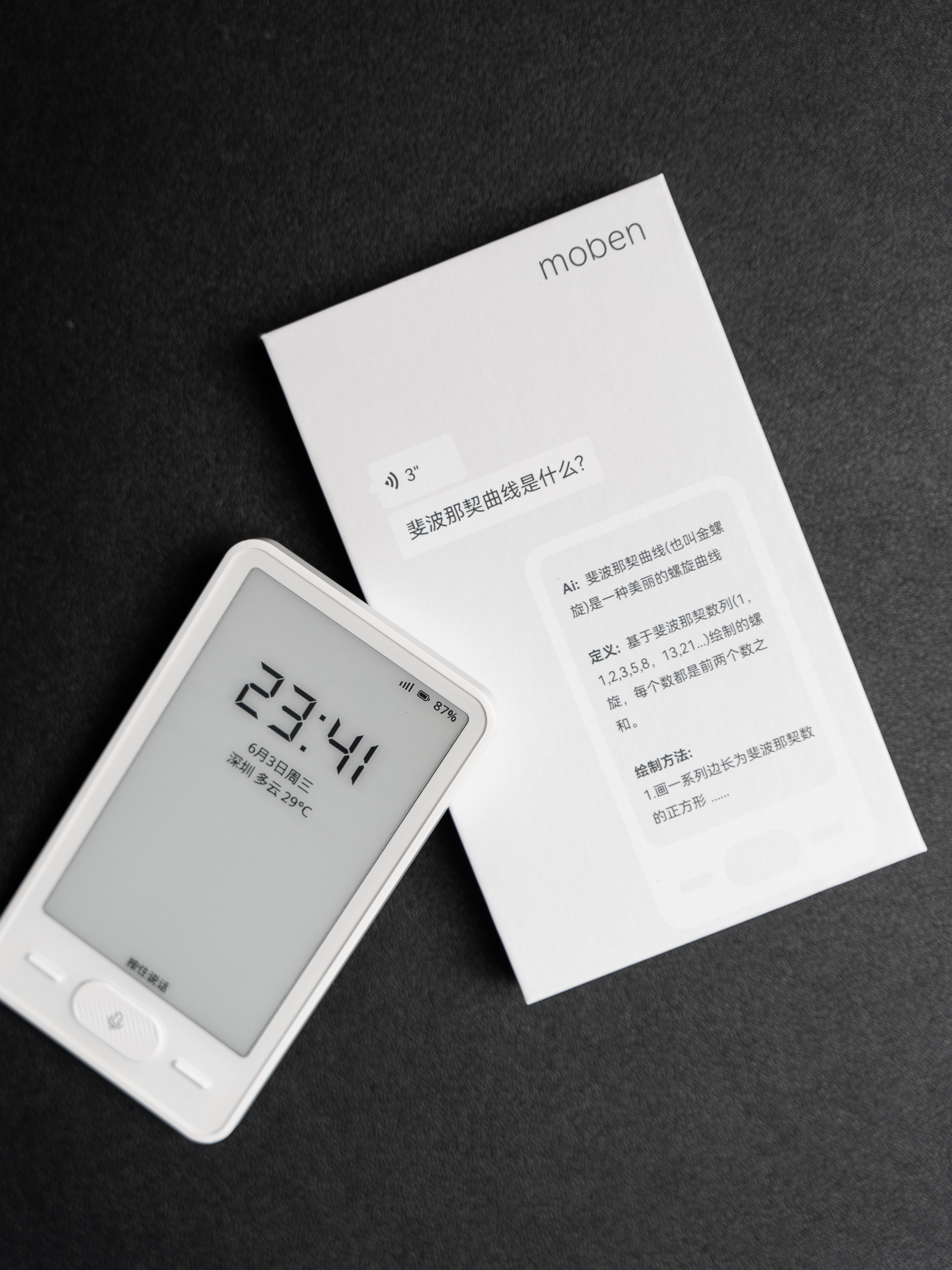
Reasoning backwards from that moment, the interaction gradually became clear: pick up the device, press and hold the central voice key, state the question, release it, and read the answer on the screen; if the content is long, turn pages with the left and right keys; if it is still not fully understood, keep asking. The whole process requires no learning of complex menus, and no rewriting of natural language into search-box keywords beforehand.
We summarized this path as "press, speak, read". Three actions look few, but few does not mean simple or rough. On the contrary, every step removed means that hardware, network, speech recognition, cloud models and the display must cooperate more tightly behind the scenes. Users should not see that complexity; they only need to feel that their question has somewhere to go.
3. A Product Is Also a Series of Deliberate Refusals
As the product took shape, many people gave us natural and very reasonable suggestions. Some said that since we were using an E Ink display, why not add e-books as well? Some said that since it can hear users' questions, why not add a speaker so AI can answer in voice? Others hoped it would have more apps and a richer interface, ideally able to carry every kind of content.
All of these suggestions could have lengthened the feature list, and could have made the product easier to place in a familiar category. But we came to realize more and more that a product's character is decided not only by what it has, but also by what it refuses.
If e-books were added, the E Ink display would easily become a bookshelf, a library and an entry point for content consumption. When users pick up the device, what faces them might no longer be their own question, but content someone else has already prepared. E-books certainly have value, but MB-1 wanted to protect something else: giving an unorganized, unclassified question the right to be expressed first. So we chose to let the screen serve answering, page turning and re-reading first, rather than turning the product into yet another reader.
The same reasoning applies to the speaker. A voice answer sounds more complete and fits the popular imagination of a "smart device" better, but sound occupies space, affects the people nearby, and disappears once spoken. Text can stop. Users can linger a few seconds on a sentence they do not understand, go back a page, or carry a single word into a follow-up question. So we made a deliberately asymmetric and very clear design choice: people express with voice, AI answers with text. Voice sends the question out; ink leaves the answer behind.
No speaker does not mean we think little of interaction; no e-books does not mean we think little of content. Precisely because we value them, we are willing to keep a clear enough boundary for "quiet questioning, focused reading, continued asking". Fewer features are not a gap in the product; they are the space left for attention.
Voice sends the question out; ink leaves the answer behind.

4. The E Ink Display Is Not Decoration but a Product Stance
MB-1 finally adopts a 3.97-inch E Ink display with 480 × 800 resolution. It does not have the vividness of a color emissive screen, nor is it suited to holding users with continuous animation. The way an E Ink display refreshes even reminds people: this is not a screen meant for endless swiping.
These seemingly limiting characteristics actually helped the product complete its own statement. Once the question is spoken, the answer lands on the screen as text; the page does not jump away by itself, and no next piece of content competes for attention. When to turn the page and when to keep asking is decided by the user. Display technology is no longer just a specification but a form of behavior design: the device does not urge you to consume more; it waits for you to finish this page.
The physical keys play the same role. The central voice key is like a door handle, and the left and right keys are responsible only for the necessary movement. Support for 4G and Wi-Fi is there so that this door can be opened in more situations; a light, portable form is there so that it can really be at hand rather than always left in a fixed spot on a desk.
We did not want to make MB-1 a shrunken phone. A phone pursues as many possibilities as possible; MB-1 pursues making one possibility natural enough: when you want to know why, you can speak immediately.
| 3.97-inch E Ink display | 480 × 800 resolution | PRESS physical voice key | 4G + Wi-Fi standalone connectivity | Type-C charging port |
5. After Beta Testing, the Product Found People We Had Not Planned For
After the product entered a longer phase of user beta testing, our earlier image of the user began to change. The initial drive came from adults' work and life, from Xia's need for immediate learning while coding with AI. But the people who picked it up most often were increasingly found among younger users — especially students from the third grade upwards who can already express questions independently and are at the stage where curiosity grows fastest.
Their questions do not queue up according to a subject syllabus. A sticking point in homework may lead on to the principle behind a concept; an animal in a book may turn to habitat, climate and evolution; a cloud outside the window may prompt a question about weather, or about light, wind and the water cycle. To adults these questions are sometimes too sudden, too fragmented, even hard to answer fully on the spot; to children they are real entry points for understanding the world.
We also saw the same contradiction in schools and at home: adults want children to encounter AI and learn how to ask questions of this era's new tools, yet they are reluctant to hand a phone stuffed with entertainment, social media and information feeds directly to a child. A principal put this dilemma clearly during a conversation — students must not miss the AI era, but the way they enter it has to match their stage of growth.
This made us understand the value of MB-1 again. It is not meant to replace all the functions of a phone, but to give children who do not have a phone — and do not need the full phone ecosystem — another path to AI. The path is narrower, and therefore clearer; it can do less, and therefore puts asking first.
The product did not find its positioning in a meeting room in one go. It was the repeated real use during beta testing that showed us: the trouble first solved for work scenarios takes on a deeper meaning among young people. An adult needs it so as not to interrupt work; a child may need it so that curiosity is not interrupted when no one answers.
An adult needs it so as not to interrupt work; a child may need it so that curiosity is not interrupted.
6. Purity Is Not About Making the World Smaller
We often describe MB-1 as a "pure AI entry point". Purity here does not mean shutting a child inside an over-simplified world, nor does it mean that every answer AI gives is naturally correct. Generative AI can make mistakes, omit context, and state uncertain content too confidently. A truly responsible product cannot package "fast answers" as "absolute truth".
So we prefer to understand safety as a set of boundaries that are continuously built: age-appropriate content and answering styles, necessary parental management, clear usage time and service status, as few irrelevant entry points as possible, and serious treatment of privacy, data and the rights of minors. Parents and teachers are not people replaced by AI; they are important companions who help children verify answers, build judgment and understand boundaries.
A good AI experience should also not let children pursue only ready-made answers. It should encourage them to keep asking why, to take conclusions back to the process, and to turn "I don't know" into a direction worth exploring. An answer can be a starting point, but it should not become the end of thinking. We hope that while using MB-1, children gradually learn to express questions more clearly, compare different explanations, verify important information, and, when necessary, seek confirmation from teachers, parents and the real world.
That is exactly where purity lies: not deciding for the child what to believe, but reducing the distractions unrelated to learning, so that more attention is left for the question itself.
7. Handing This Era's Gift to Those Who Are Growing Up
Looking back, the story of MB-1 has two images that seem very far apart. In the first, Xia sits in front of the code window while AI generates a program, and a question about new knowledge suddenly appears. In the second, a young student picks up a palm-sized device, holds down the key, speaks a doubt about the world, and then looks down to read the answer on the E Ink screen.
What connects these two images is not a profession and not a subject, but the same ability: curiosity.
We are glad that a daily annoyance the team first solved for itself has become a new entry point for young people to reach AI. And we are increasingly firm about our mission: to make the best possible use of AI, the most valuable tool of this era, and hand it to young people who are growing vigorously, in a way that feels more natural, has clearer boundaries and offers a safer environment.
We do not want to hand them yet another screen full of notifications, content and temptation, nor to fill the time that should be left for observation, thinking and imagination with an ever-longer feature list. What we want to deliver is a small door: pick it up, hold the key, speak the question; the answer appears in ink, and the world unfolds again from that question.
Perhaps a child asks about a homework problem today, an insect tomorrow, and the day after about the universe, machines, music or a story they want to write. No one can dictate in advance where these questions will lead. Nor should AI decide for them who to become. All we can do is make every genuine question easier to catch, let every answer lead naturally to the next question, let interests become clear through continued exploration, and let talent gradually take shape in one "why" after another.
MB-1 does not want to be the whole digital world of young people. It only wants to hold on to that instant when a question first appears.
Speak, and the answer comes; ink, and it becomes a page.
Make questions easier to begin, let exploration continue, and let talent show its outline in question after question.
Notes on Sources and Background
This article is based on team interviews, existing MOBEN product materials, user beta testing and classroom discussion materials. To protect user privacy, the text contains no identifiable names, schools or individual data of minors; the learning scenarios in the narrative summarize many kinds of real needs and do not represent a verbatim record of any single user. AI-generated content still needs verification, and the product does not replace the judgment of teachers, parents or professionals.
Public background materials include: the MOBEN official website and public product coverage; the Guidelines for the Use of Generative Artificial Intelligence by Primary and Secondary School Students (2025 edition) issued under the Ministry of Education's basic education teaching guidance committee; the Regulations on the Protection of Minors on the Internet; UNICEF's Guidance on AI and Children 3.0; UNESCO's Guidance for Generative AI in Education and Research; E Ink official technology notes; and Microsoft Research work on conversational AI programming workflows. These materials serve to explain the background of the era and the design principles; they do not constitute any additional promise about specific product performance.
References
• MOBEN official website: https://moben.cn/
• MOBEN public product coverage: https://www.jinantimes.com.cn/news-288-5269234.html
• Guidelines for the Use of Generative Artificial Intelligence by Primary and Secondary School Students (2025 edition): https://jyj.linxia.gov.cn/jyj/xxgk/fdzdgknr/zcwj/GJZC/art/2025/art_ec21649bfa774fb28ca73d6c6e287e4c.html
• Regulations on the Protection of Minors on the Internet: https://www.miit.gov.cn/jgsj/zfs/xzfg/art/2023/art_60743e5d87b349099d24fdd54d77d8ab.html
• UNICEF, Guidance on AI and Children: https://www.unicef.org/innocenti/reports/policy-guidance-ai-children
• UNESCO, Guidance for Generative AI in Education and Research: https://www.unesco.org/en/articles/guidance-generative-ai-education-and-research
• E Ink technology notes: https://www.eink.com/tech/detail/Benefits
• Microsoft Research, conversational AI programming: https://www.microsoft.com/en-us/research/publication/vibe-coding-programming-through-conversation-with-artificial-intelligence/